#BitcoinSpotVolumeNewLow
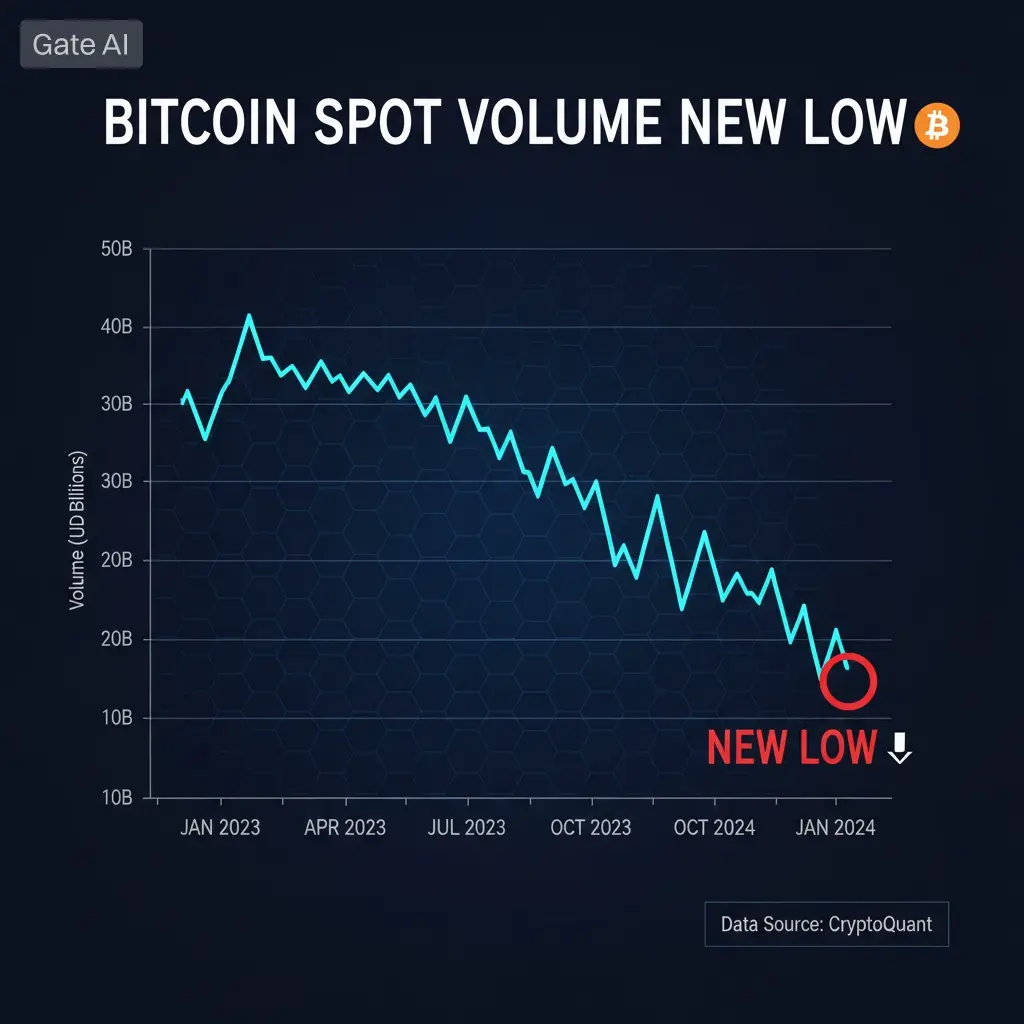
🚨 Bitcoin Market Structure Signal — Spot Volume at New Low 🚨
The emergence of a “Bitcoin spot volume new low” condition is a significant microstructure signal that speaks less about price direction in isolation and more about the underlying participation quality of the market. In liquid markets like Bitcoin, price is only one dimension of behavior; volume, participation breadth, and execution intensity often provide a deeper reading of the system’s internal state.
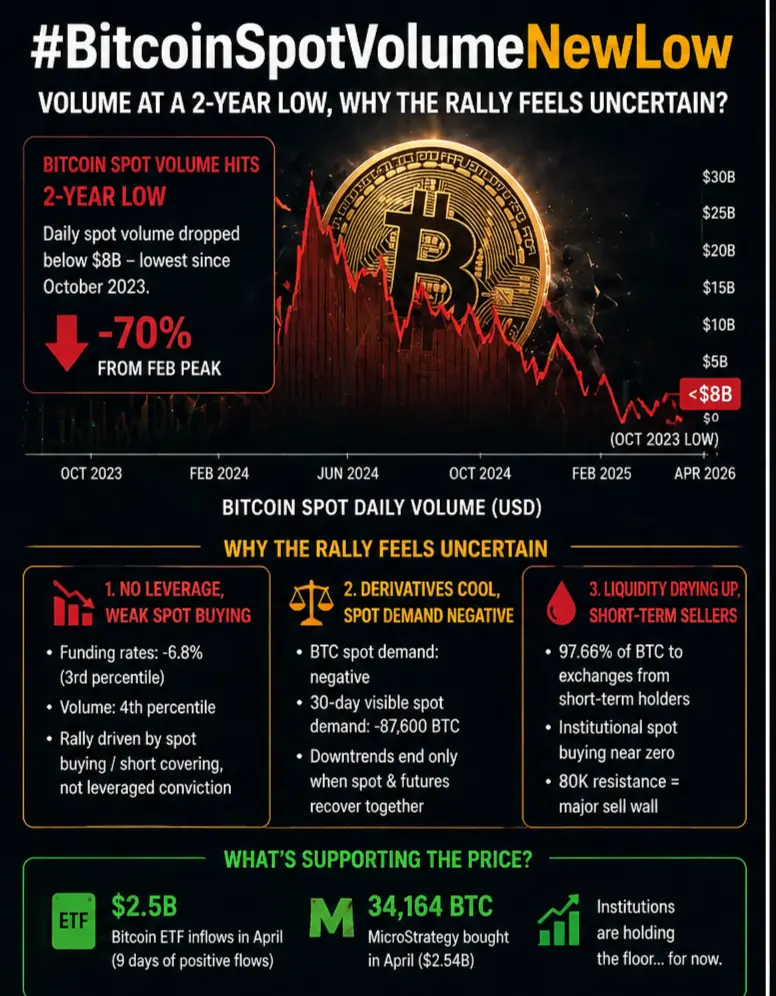
When spot volume declines to new lows, it typically indicates a reduction in genuine directional conviction from cash-driven participants. Spot volume represents real buying and selling activity without leverage amplification, meaning it is closely tied to organic demand rather than derivative-driven speculation. A drop in this metric suggests that fewer participants are engaging in outright accumulation or distribution at current price levels.
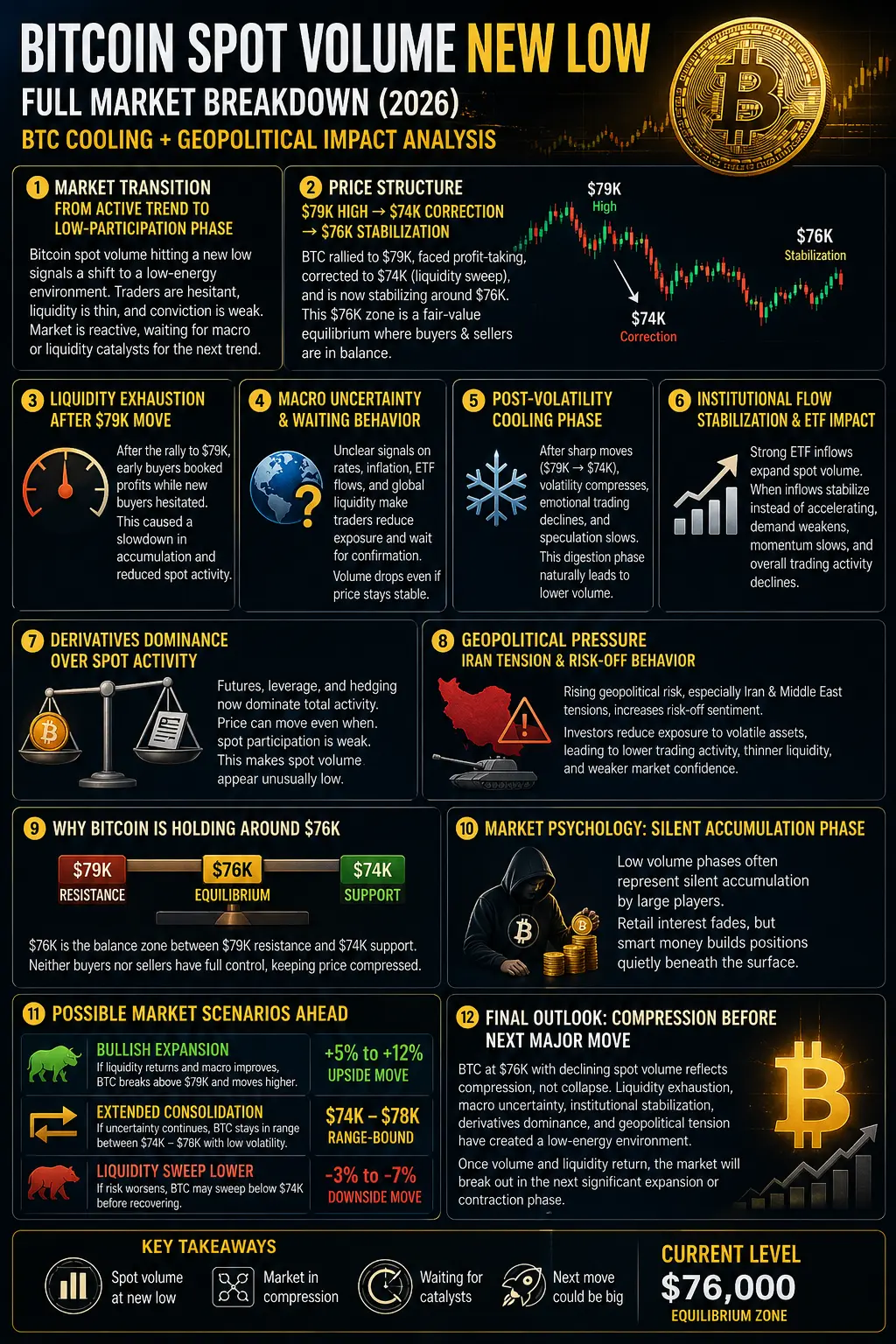
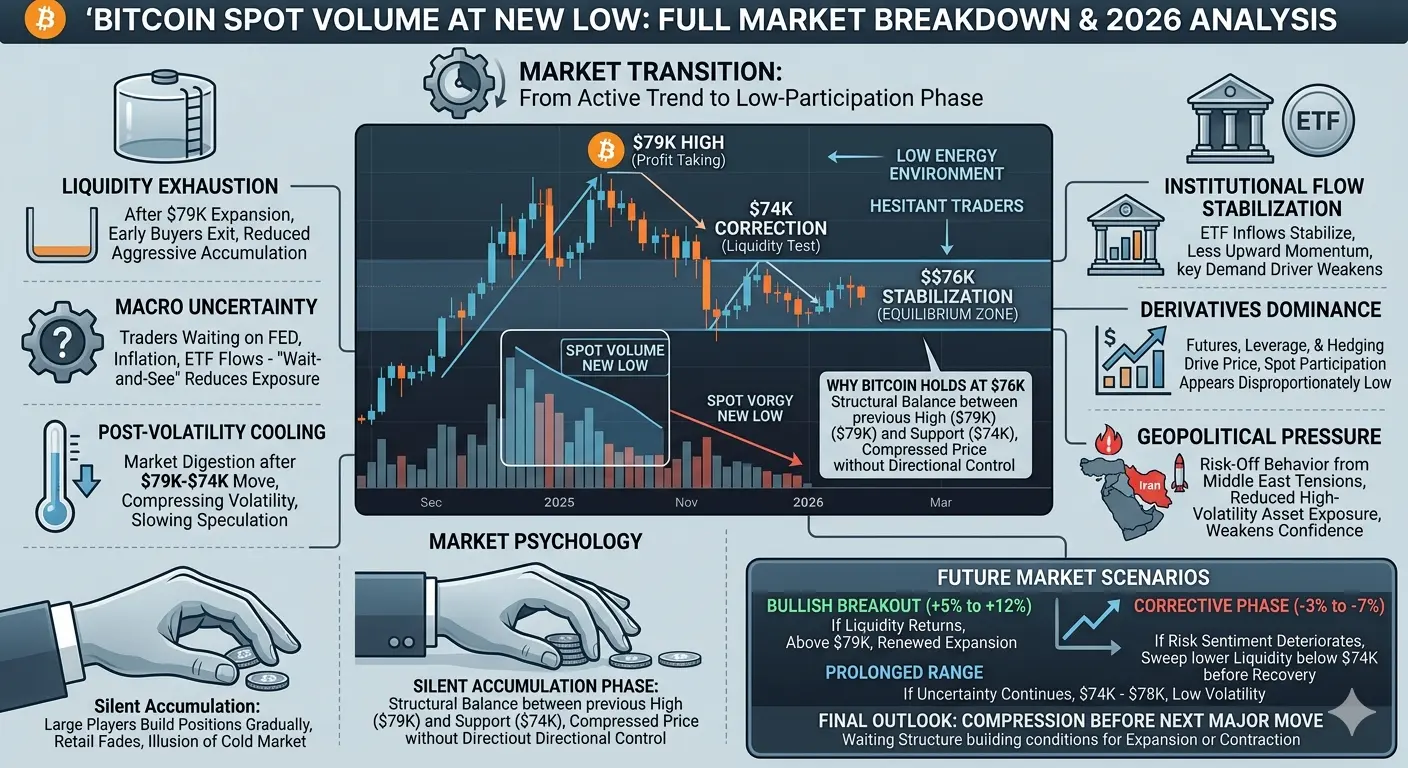
This type of environment often reflects a transition into a low-conviction equilibrium phase. In such phases, the market is not strongly trending in either direction because neither buyers nor sellers are aggressively willing to transact at prevailing prices. Instead, activity becomes dominated by passive flows, internal position adjustments, and derivative hedging rather than strong spot-driven accumulation.
One important implication of declining spot volume is the potential weakening of price discovery efficiency. In healthy trending markets, rising or sustained volume confirms directionality and supports continuation. When volume contracts, price movements become more sensitive to relatively small orders, which can increase short-term volatility but reduce structural momentum.
This condition is often associated with what can be described as a “liquidity air pocket” at the spot layer. In such environments, the visible order flow on exchanges thins out, and marginal price movements are increasingly driven by derivatives positioning rather than cash market demand. This does not necessarily imply bearishness, but it does indicate fragility in trend continuation unless new demand enters the system.
From a behavioral perspective, low spot volume often corresponds with a phase of uncertainty or wait-and-see positioning among market participants. Traders may be reluctant to commit capital due to lack of clear macro catalysts, mixed sentiment signals, or anticipation of higher-impact events. This leads to reduced turnover and lower engagement in directional spot trades.
At the same time, it is important to distinguish between distribution-driven low volume and accumulation-driven low volume environments. In distribution phases, declining volume is accompanied by sustained selling pressure and weakening support levels. In accumulation phases, low volume may occur while long-term holders quietly absorb supply without aggressive trading activity. The key difference lies in whether price structure remains stable or begins to deteriorate.
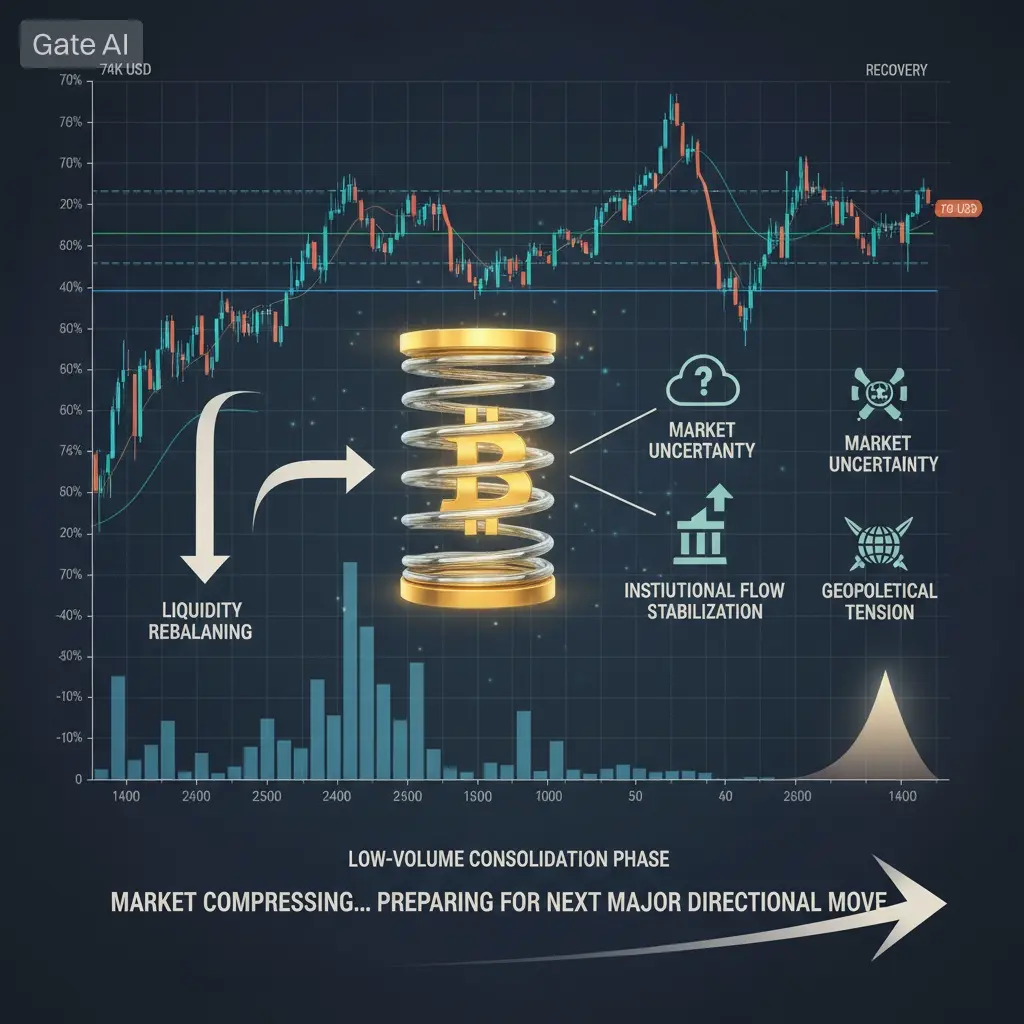
In the current context, the presence of low spot volume combined with broader macro sensitivity suggests a transitional structure rather than a clear directional regime. Markets in this state often consolidate, forming ranges where volatility compresses and participants await external catalysts to define the next impulse move.
Another critical layer is the interaction with derivatives markets. When spot volume declines, futures and perpetual markets often become more dominant in price formation. This can lead to a situation where price is driven more by leverage dynamics, funding rates, and liquidation cascades than by underlying cash demand. In such cases, short-term price action may appear more volatile or disconnected from spot flow, even though the underlying driver is structural liquidity imbalance.
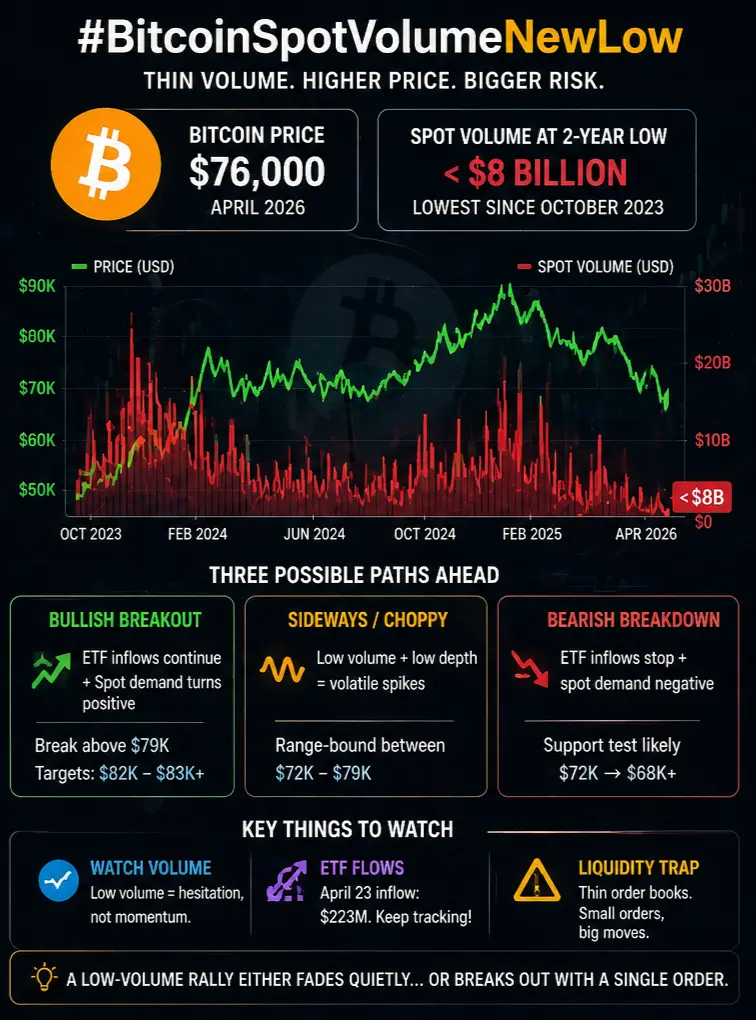
Low spot volume conditions also tend to precede periods of volatility expansion. When participation compresses for an extended period, the market becomes increasingly sensitive to external shocks. A relatively small catalyst—macro data, ETF flows, regulatory news, or large order execution—can trigger outsized price movement because there is limited depth of active participation to absorb the flow.
From a cycle perspective, these phases often occur after either strong upward or downward moves, when the market is digesting prior volatility. Participants who were active during the previous trend may have reduced engagement, while new participants have not yet entered at scale. This creates a temporary participation gap.
Importantly, low spot volume does not inherently imply bearish structure. Instead, it reflects a state of indecision or equilibrium where conviction is absent on both sides. The eventual resolution depends on which side—buyers or sellers—re-enters the market with sufficient strength to break the equilibrium.
If new demand emerges, low-volume environments can act as springboards for rapid upward repricing due to thin resistance. Conversely, if latent supply dominates, the same conditions can lead to accelerated downside once support levels fail.
In summary, Bitcoin spot volume reaching a new low is a structural signal of reduced organic participation, increased reliance on derivatives for price discovery, and a transitional market state characterized by low conviction and compressed liquidity. While not inherently directional, it often marks a preparatory phase for larger volatility expansion once external catalysts reintroduce strong participation into the system.
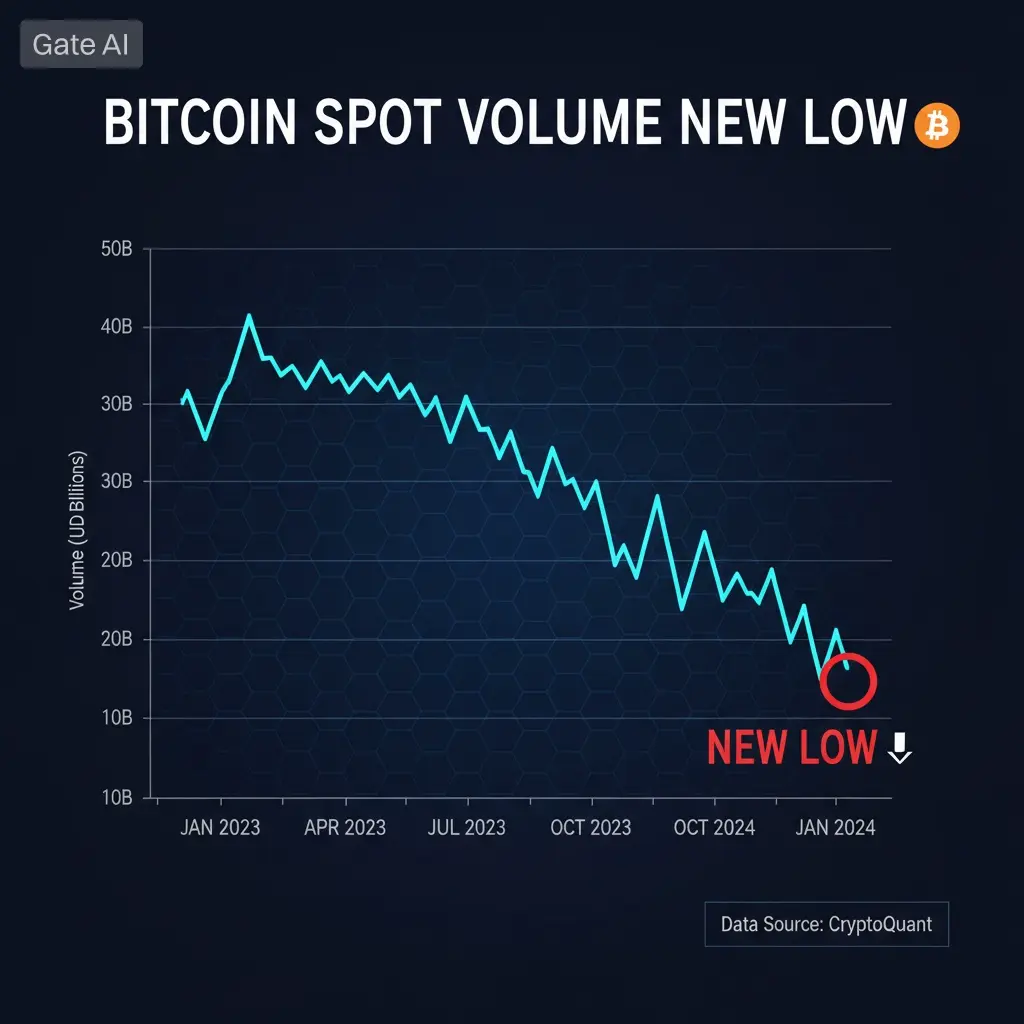
🚨 Bitcoin Market Structure Signal — Spot Volume at New Low 🚨
The emergence of a “Bitcoin spot volume new low” condition is a significant microstructure signal that speaks less about price direction in isolation and more about the underlying participation quality of the market. In liquid markets like Bitcoin, price is only one dimension of behavior; volume, participation breadth, and execution intensity often provide a deeper reading of the system’s internal state.
When spot volume declines to new lows, it typically indicates a reduction in genuine directional conviction from cash-driven participants. Spot volume represents real buying and selling activity without leverage amplification, meaning it is closely tied to organic demand rather than derivative-driven speculation. A drop in this metric suggests that fewer participants are engaging in outright accumulation or distribution at current price levels.
This type of environment often reflects a transition into a low-conviction equilibrium phase. In such phases, the market is not strongly trending in either direction because neither buyers nor sellers are aggressively willing to transact at prevailing prices. Instead, activity becomes dominated by passive flows, internal position adjustments, and derivative hedging rather than strong spot-driven accumulation.
One important implication of declining spot volume is the potential weakening of price discovery efficiency. In healthy trending markets, rising or sustained volume confirms directionality and supports continuation. When volume contracts, price movements become more sensitive to relatively small orders, which can increase short-term volatility but reduce structural momentum.
This condition is often associated with what can be described as a “liquidity air pocket” at the spot layer. In such environments, the visible order flow on exchanges thins out, and marginal price movements are increasingly driven by derivatives positioning rather than cash market demand. This does not necessarily imply bearishness, but it does indicate fragility in trend continuation unless new demand enters the system.
From a behavioral perspective, low spot volume often corresponds with a phase of uncertainty or wait-and-see positioning among market participants. Traders may be reluctant to commit capital due to lack of clear macro catalysts, mixed sentiment signals, or anticipation of higher-impact events. This leads to reduced turnover and lower engagement in directional spot trades.
At the same time, it is important to distinguish between distribution-driven low volume and accumulation-driven low volume environments. In distribution phases, declining volume is accompanied by sustained selling pressure and weakening support levels. In accumulation phases, low volume may occur while long-term holders quietly absorb supply without aggressive trading activity. The key difference lies in whether price structure remains stable or begins to deteriorate.
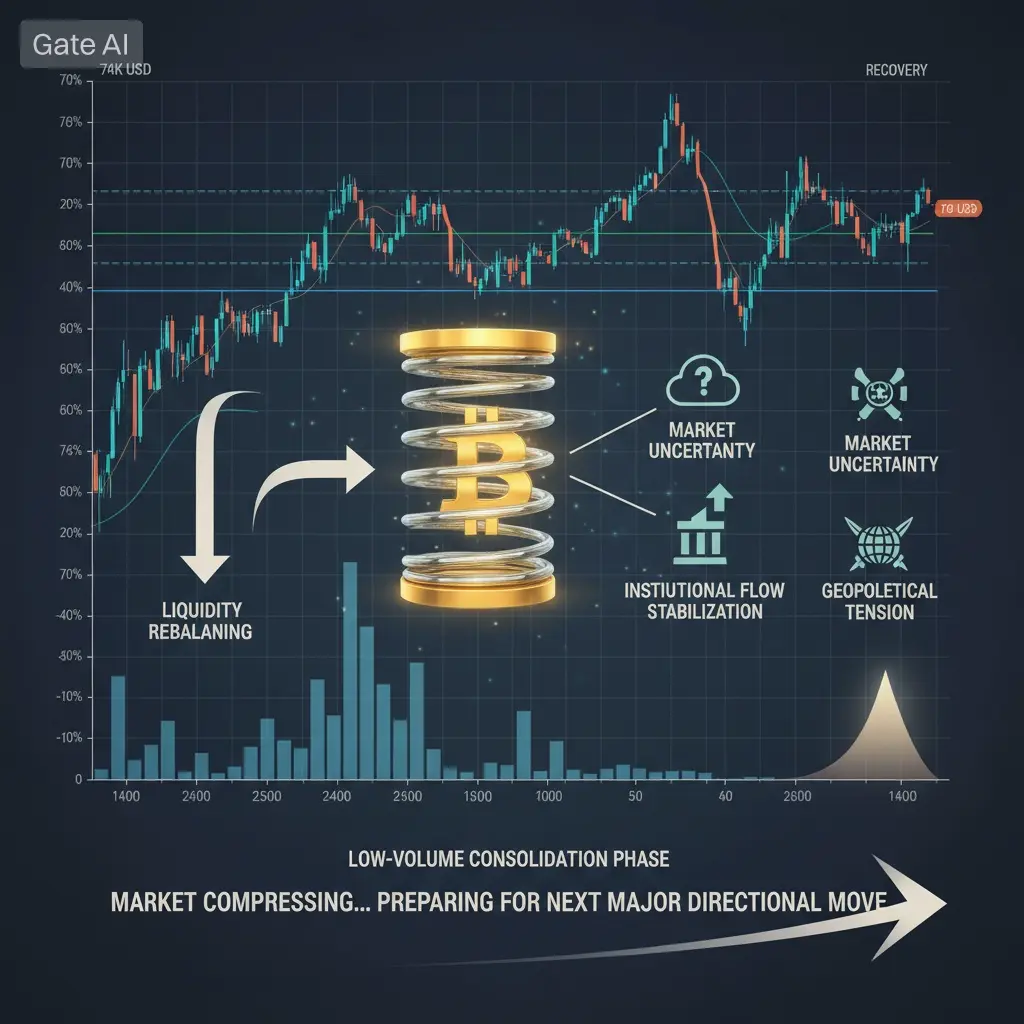
In the current context, the presence of low spot volume combined with broader macro sensitivity suggests a transitional structure rather than a clear directional regime. Markets in this state often consolidate, forming ranges where volatility compresses and participants await external catalysts to define the next impulse move.
Another critical layer is the interaction with derivatives markets. When spot volume declines, futures and perpetual markets often become more dominant in price formation. This can lead to a situation where price is driven more by leverage dynamics, funding rates, and liquidation cascades than by underlying cash demand. In such cases, short-term price action may appear more volatile or disconnected from spot flow, even though the underlying driver is structural liquidity imbalance.
Low spot volume conditions also tend to precede periods of volatility expansion. When participation compresses for an extended period, the market becomes increasingly sensitive to external shocks. A relatively small catalyst—macro data, ETF flows, regulatory news, or large order execution—can trigger outsized price movement because there is limited depth of active participation to absorb the flow.
From a cycle perspective, these phases often occur after either strong upward or downward moves, when the market is digesting prior volatility. Participants who were active during the previous trend may have reduced engagement, while new participants have not yet entered at scale. This creates a temporary participation gap.
Importantly, low spot volume does not inherently imply bearish structure. Instead, it reflects a state of indecision or equilibrium where conviction is absent on both sides. The eventual resolution depends on which side—buyers or sellers—re-enters the market with sufficient strength to break the equilibrium.
If new demand emerges, low-volume environments can act as springboards for rapid upward repricing due to thin resistance. Conversely, if latent supply dominates, the same conditions can lead to accelerated downside once support levels fail.
In summary, Bitcoin spot volume reaching a new low is a structural signal of reduced organic participation, increased reliance on derivatives for price discovery, and a transitional market state characterized by low conviction and compressed liquidity. While not inherently directional, it often marks a preparatory phase for larger volatility expansion once external catalysts reintroduce strong participation into the system.