LiquidityLifeguard

vip
Age 0.1 Year
Peak Tier 0
Liquidity pools are like the ocean—I only swim where the safety flag is raised. I pay attention to impermanent loss and fees, and I love teaching beginners not to dive in when the waves are high.
Just reviewed a failed token swap, really a lesson for myself... At the time, I saw the pool fee rate looked attractive and went all in, but the slippage was too loose, the depth wasn't enough, someone ate up the liquidity in one bite, and my transaction directly floated away. To put it simply: I was reckless and still wanted to jump into the water, then blamed the cold water.
From now on, I’ll add a “backup” habit for myself: before placing an order, leave a small amount first, test the actual transaction, then split it into two or three slow steps, don’t just rush in and turn myself into som
View Original
  • Reward
  • Comment
  • Repost
  • Share
Lately, I've been watching large on-chain whales move quite actively, and the group is arguing again about whether the extreme funding rates indicate a reversal or just a continued bubble. Honestly, before following the trend, ask yourself: Are they gradually building a position, or are they hedging risk? The same large inflows and outflows, building a position tends to be more "sticky," with phased entries and holding onto positions without much retracement; hedging, on the other hand, often involves quick in-and-out moves, coming fast and leaving just as quickly, and following them easily ca
View Original
  • Reward
  • Comment
  • Repost
  • Share
Recently, many people have been asking where the returns from LST/re-staking come from. To put it simply, there are two main sources: one is the stable output from underlying staking (plus possible points/incentives), and the other is packaging the "same level of security" and selling it to other protocols as an endorsement, earning service fees/subsidies. It sounds pretty attractive, but the risks are quite straightforward: the underlying involves staking risk + de-pegging, and on top of that, there's a trust chain of "who will compensate" — if something goes wrong, it could propagate layer b
ETH0.29%
View Original
  • Reward
  • Comment
  • Repost
  • Share
Recently, I came across a bunch of "high APY" yield aggregators. Honestly, I'm a bit exhausted but still watching... Because behind the APY numbers, it's often not "money falling from the sky," but contracts lending out your tokens, swapping pools, stacking layers, and in the end, it's not always clear who your actual counterparty is. The fee rates look attractive, but when you encounter slippage + impermanent loss stacking up, it effectively becomes "risk for a screenshot."
I now have a habit: first, check which contracts the money has entered, whether there are upgrade permissions, and if th
View Original
  • Reward
  • Comment
  • Repost
  • Share
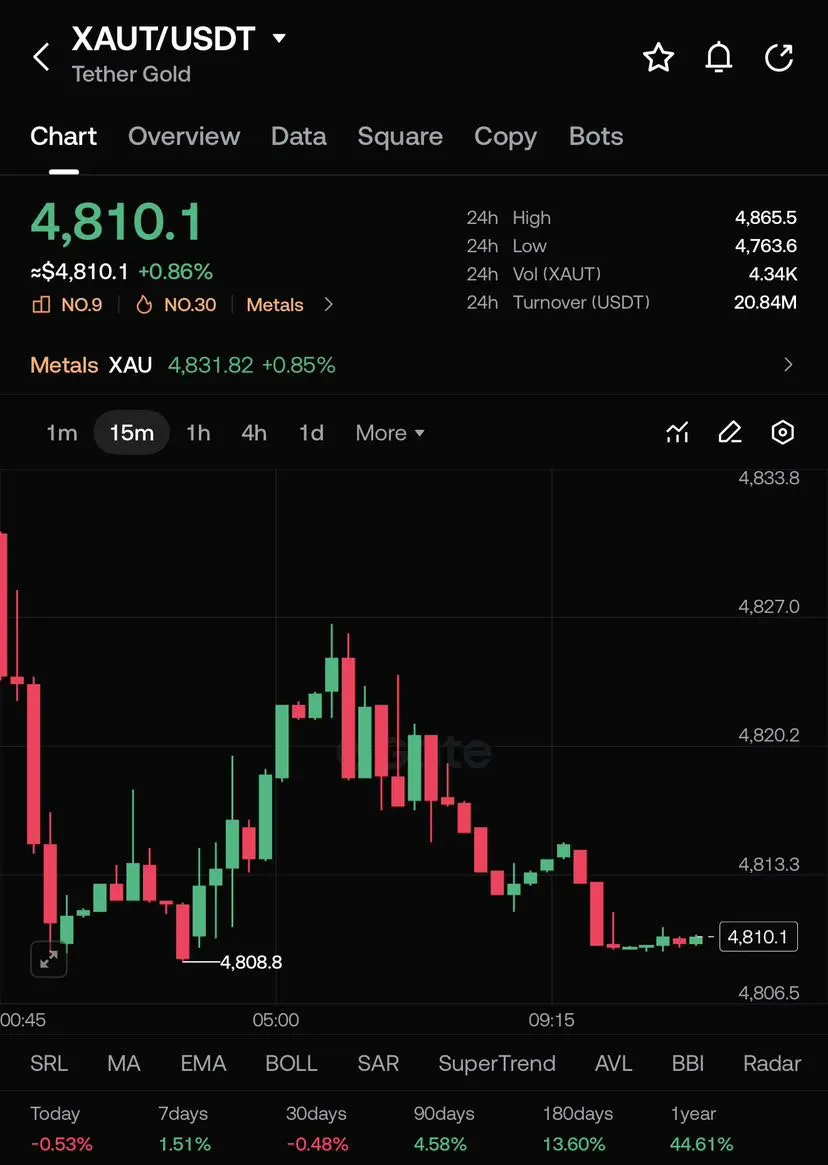
Anyone looking to buy the dip, wait a moment first. Until a clear breakdown of the structure is seen, the bears still hold the advantage.
View Original
LedgerBull
$XAUT showing mild weakness with controlled downside pressure.
Structure remains bearish with sellers defending local highs.
EP
4,820 – 4,840
TP
TP1 4,780
TP2 4,750
TP3 4,700
SL
4,870
Liquidity above 4,850 remains untapped while price trends lower. Weak upside reactions with lower high formation suggest continuation to the downside if resistance holds.
Let’s go $XAUT ‌
repost-content-media
  • Reward
  • Comment
  • Repost
  • Share
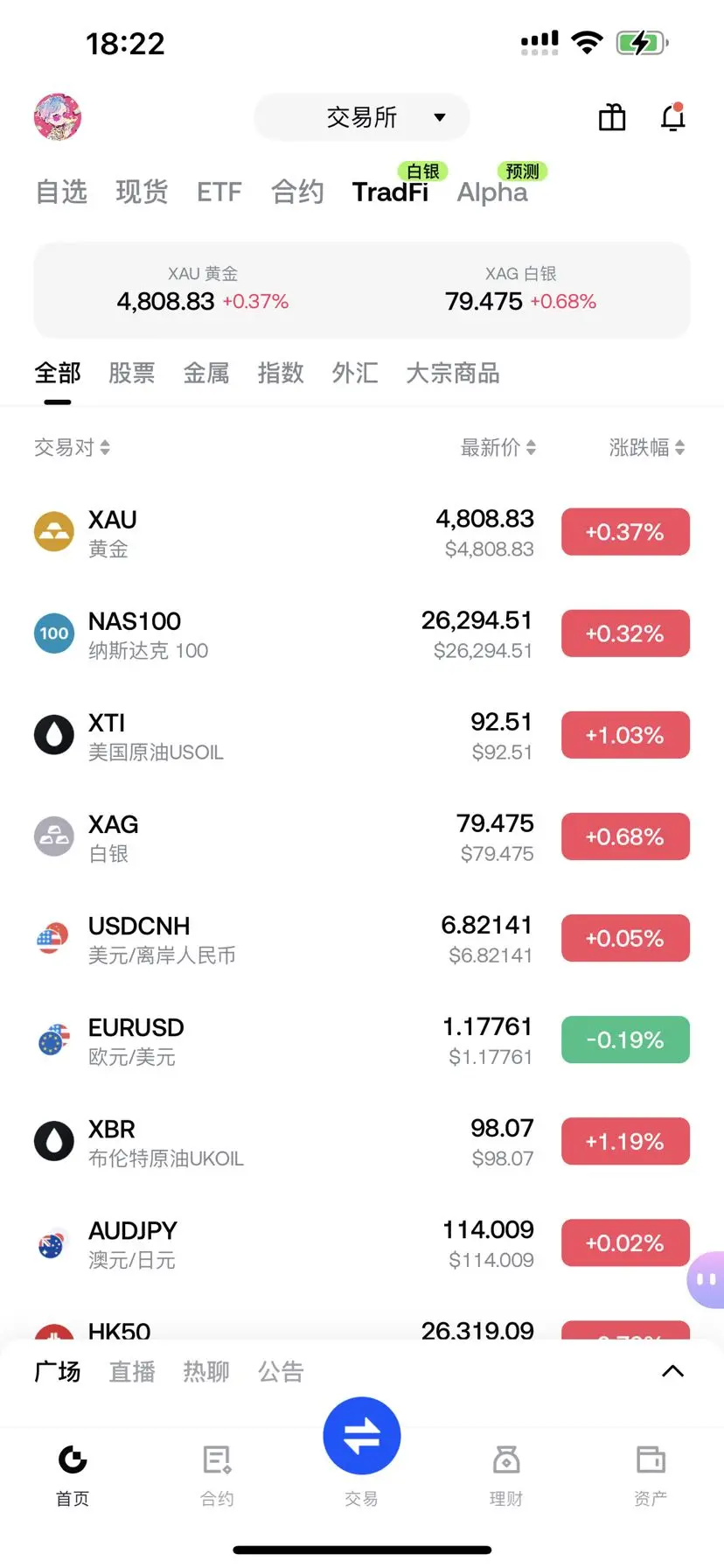
The situation with Iran is highly uncertain, and the tug-of-war between gold and the US dollar could be very intense. Don't chase highs in the short term.
View Original
CryptoSat
Gold bug Peter Schiff says gold is the best asset to buy right now because of the Iran situation.
Gold will eventually rise no matter what — whether the conflict de-escalates with a ceasefire or escalates further.
repost-content-media
  • Reward
  • Comment
  • Repost
  • Share
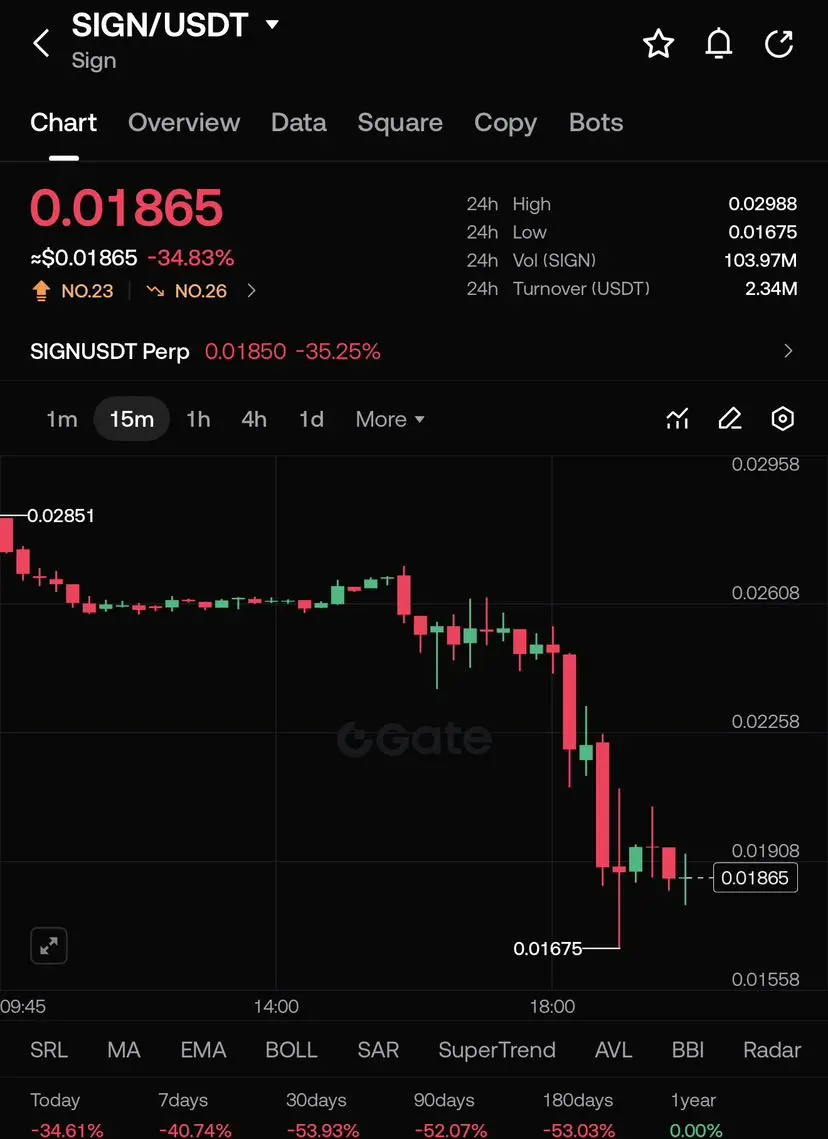
Seeing "drop sharply after sweeping up" made me alert; the market manipulator's harvesting rhythm is too familiar.
View Original
LedgerBull
$SIGN showing strong downside pressure after aggressive breakdown.
Sellers in full control with structure clearly trending bearish.
EP
0.0185 - 0.0200
TP
TP1 0.0170
TP2 0.0155
TP3 0.0140
SL
0.0225
Liquidity was swept on the upside before a heavy sell-off, confirming distribution. Weak bounce and lack of bullish structure suggest continuation lower unless price reclaims the breakdown level.
Let’s go $SIGN ‌
repost-content-media
  • Reward
  • Comment
  • Repost
  • Share
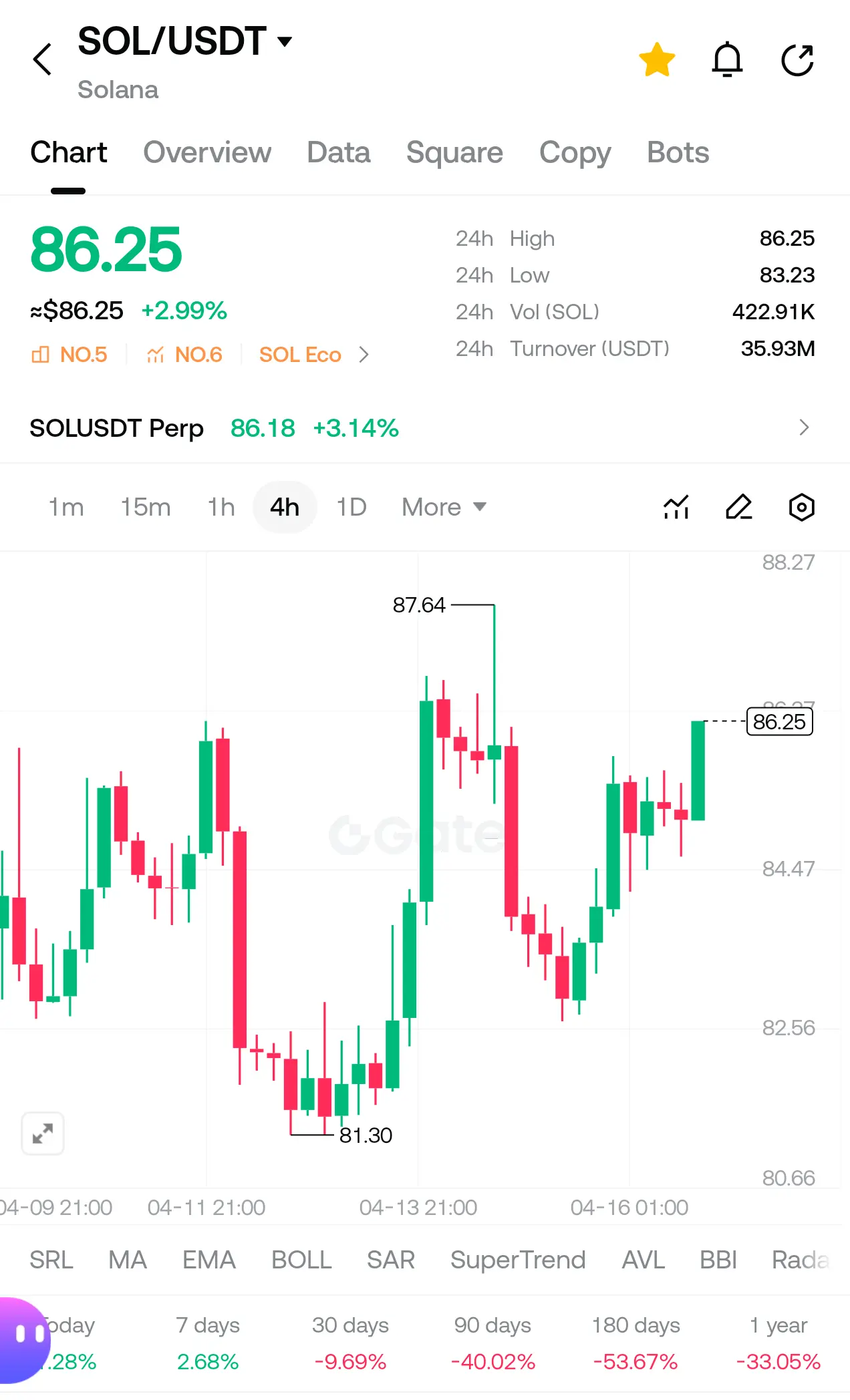
Below, 82 first sweeps liquidity and then pulls back. I also like this kind of structural reversal, hoping it can keep raising the lows along the way.
View Original
MarcusCorvinus
$SOL bullish recovery, structure turning strong
I’m seeing a clean bounce from 81.3 and price reclaiming higher levels.
Momentum is building again after the dip.
Entry : 85 – 86
Target : 88 → 92
Stop Loss : 82.5
How it’s possible :
Liquidity grabbed below 82 → strong reaction → now higher lows forming.
If 87.6 breaks, continuation accelerates.
I’m bullish while this recovery holds.
Let’s go and Trade now $SOL ‌
repost-content-media
  • Reward
  • Comment
  • Repost
  • Share
If the deal actually goes through, the selling pressure from profit-taking will most likely follow, so don't treat "implementation" as a guarantee of "continued rise."
View Original
Furan86999
What does this situation between Iran and the U.S. look most like right now? It’s like one side is talking about “reconciling today,” while the other raises their fists even higher. Diplomats shuttle back and forth and try to mediate in Tehran, but the Pentagon reports actions of troop increases and redeployments. As the April 21 “ceasefire deadline” gets closer, the market feels more like it’s playing an emotional betting game: the S&P hits new highs, risk assets rebound, and even crypto gets excited along with it. The problem is— is this dawn, or a lure to buy before the storm?
First, lay out the core contradiction clearly: whether the so-called talks can succeed is not about whether people are willing to shake hands, but whether both sides can find a plan that they can both explain to their people internally on hard conditions such as uranium enrichment timeframes, restrictions on nuclear activities, and the easing of sanctions. Economic interests are naturally the catalyst—everyone wants oil prices not to run wild, inflation not to come back, and capital not to flee. But don’t ignore the other side: troop increases, deterrence, and red-line statements are also bargaining chips on the negotiation table. In many cases, the closer you get to the deadline, the bigger the moves become— which actually shows that both sides are stepping up and probing by adding more.
The logic behind the market’s preemptive celebration isn’t complicated: it’s betting on “the most comfortable script”—talks succeed, oil prices fall, inflation pressure eases, rate-cut expectations become more stable, and risk assets keep rising. But the point at which the market is most likely to lose money is exactly this: expectations are running ahead of reality. When everyone is talking about talks, and the price has already priced in “successful negotiations,” at the moment it truly lands, a typical “good-news realization” may occur— it may not be a trend reversal, but short-term pullbacks and taking profits are almost certain events. Conversely, if negotiations don’t advance as expected, or sudden breaking news sparks a close call, the market will instantly switch to another script: oil prices jump, the dollar strengthens, and risk assets retreat collectively— you’ll see “the same group of people shift from optimism to panic at the same speed.”
How should you allocate during that period of turbulence? I’ll give you a more practical “three-tier approach”—not aiming for a single decisive answer, only for something steadier:
First tier: keep cash/keep rounds.
The most valuable thing in a volatile period is liquidity. Don’t put all your positions in at once; leave room to respond to unexpected volatility, so you won’t be forced to cut losses due to emotion.
Second tier: separate a core position from a satellite position.
The core position is more defensive: large-cap assets, cash-like allocations, and low-volatility positioning, with the goal of withstanding volatility. The satellite position is more offensive: thematic assets and flexible assets, using smaller positions to chase expectations. Separating “wanting to make more” from “not being allowed to lose big” makes your mindset much more comfortable.
#美伊局势和谈与增兵博弈 #美股创下历史新高
repost-content-media
  • Reward
  • Comment
  • Repost
  • Share
Actually, everyone understands that once RWA is on the chain, it's easy to be dazzled by the words "on-chain liquidity": seeing the pool deep and quotes smooth, only to find when redeeming that you're stuck in the terms—T+ several days, limits, whitelists, or even "suspension under special circumstances." In plain terms, liquidity is conditional.
My current approach is quite simple: first review the redemption terms and the custody/settlement pathways, then see if the market-making relies on incentives built up; otherwise, no matter how attractive the fee rates are, I wouldn't dare to jump i
View Original
  • Reward
  • Comment
  • Repost
  • Share
  • Pin