GateUser-cf218ace

vip
Age 0.1 Year
Peak Tier 0
I like to analyze trends using on-chain metrics, especially TVL, active addresses, and real revenue. There's less emotion involved, which actually makes it even more striking.
Recently, discussions about "privacy" on the blockchain have heated up again, and my expectations are becoming simpler: a public chain is inherently traceable, and privacy is more about raising the difficulty rather than making you disappear. To put it plainly, ordinary users shouldn't treat it as a talisman, at most as noise-canceling headphones.
The compliance boundaries are roughly the same; many products are packaged as "on-chain savings and earning," and they compare it to RWA and U.S. Treasury yields, which look quite stable. But the real income, fund inflow and outflow structures, and a
View Original
  • Reward
  • Comment
  • Repost
  • Share
The news sentiment has been like a roller coaster these past two days: Trump teases, Iran quickly refutes rumors, and the market has become numb, making prices more easily driven by liquidity.
View Original
LeftEarZ
Continuous Settlement Market Play
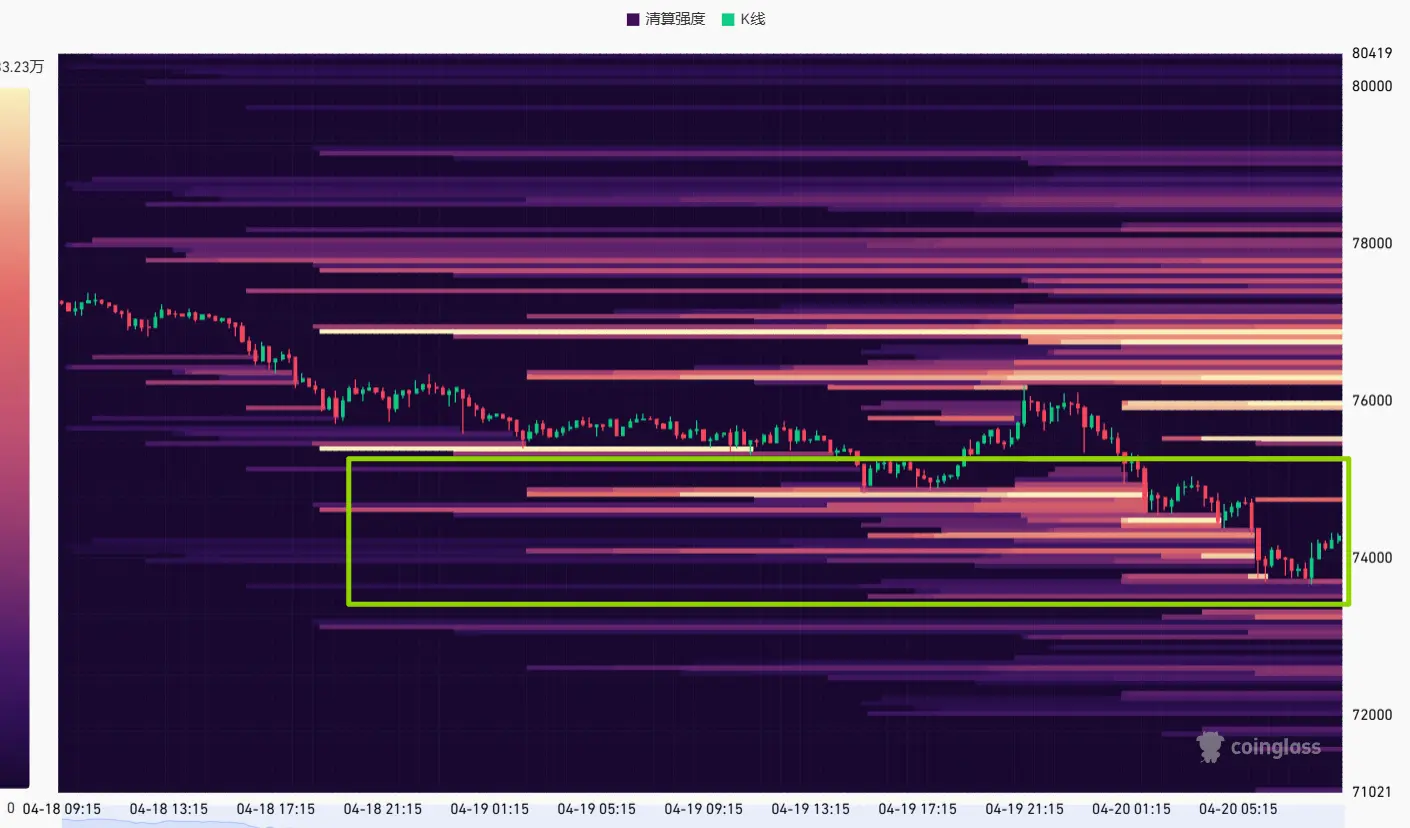
This rebound dropped from around 78,000 near the high point to around 74,000
The dense short-term liquidity below was liquidated in the short term, and long orders at 75,200/74,800/74,400, among others, were collectively liquidated last night.
Right now, there’s quite a lot of short liquidity only above 76,000-78,000. The daily level around 78,000 is a relatively strong resistance zone. Generally, resistance like this will not be broken through all at once unless the market fundamentals are driving it, so after a small pullback.
There isn’t any good news on the news front either. On one side, Trump is frantically putting out positive signals to the market, but not long after that, Iran will come out to deny it, and the market’s sensitivity to the US-Iran war is gradually decreasing.
The real thing that caused this drop is still what Trump said last night: that he would send Vance to Islamabad for a second round of talks with Iran. As soon as that happened, Iran jumped out to deny it, denying that any talks would be held in Islamabad, and also suspecting that it was being used as cover for a surprise attack.
Since they couldn’t agree and the ceasefire period ends immediately on Tuesday, it means they’re going to start fighting again.
On top of that, the primary market has seen two hacking incidents in just one month, with losses exceeding $500 million. If the secondary market is pessimistic, then the primary market is in despair—everything looks dead silent going forward.
The news is a complete mess, and both the overall market and altcoins are also using the ceasefire negotiation period to go out and stretch their legs.
So the outlook for the subsequent market is not very optimistic; personally, I’m leaning bearish. It’s always correct to short on rallies in a bear market.
Finally, there are 723 days until Bitcoin’s halving. Personally, I suggest shifting from bearish inertia to bullish inertia starting from 500 days before the halving. History won’t repeat exactly, but it’s pretty much the same.
If within the next 200+ days there’s still another drop—BTC starting with 5, or a wick-spike down starting with 4—then this bear market is basically at its end.
If not, then this bear market is again different from the past, proving that the blockchain is moving toward stability.
Because in previous bear markets, the very last drop would always involve some big player being sacrificed.
repost-content-media
  • Reward
  • Comment
  • Repost
  • Share
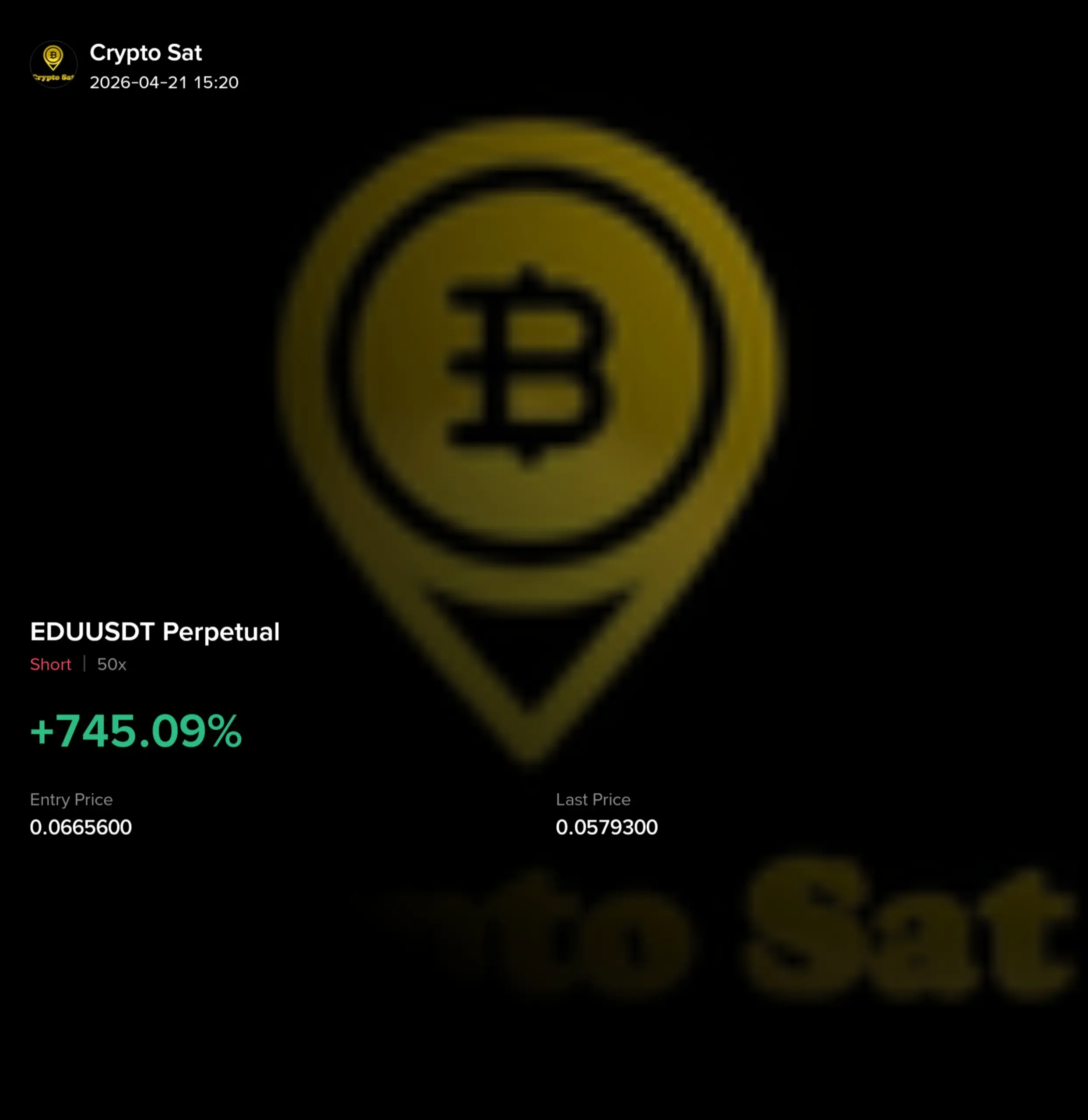
Understood, $EDU 0.06 moving stop-loss arrangement in place.
EDU-32%
View Original
CryptoSat
Set trailing $EDU stop loss at 0.06 👍
repost-content-media
  • Reward
  • Comment
  • Repost
  • Share
It's normal for Reddit debates to get heated; the key is whether you're trading based on short-term emotions or holding long-term with clear regulations.
View Original
CryptoFrontier
XRP Community Split on CLARITY Act as Sell-the-News Skepticism Rises
While the CLARITY Act has garnered unprecedented institutional backing—including support from the White House, Coinbase CEO Brian Armstrong, and Senator Cynthia Lummis—the XRP community is divided on whether the legislative momentum represents a genuine catalyst or a "sell-the-news" trap. Reddit and
  • Reward
  • Comment
  • Repost
  • Share
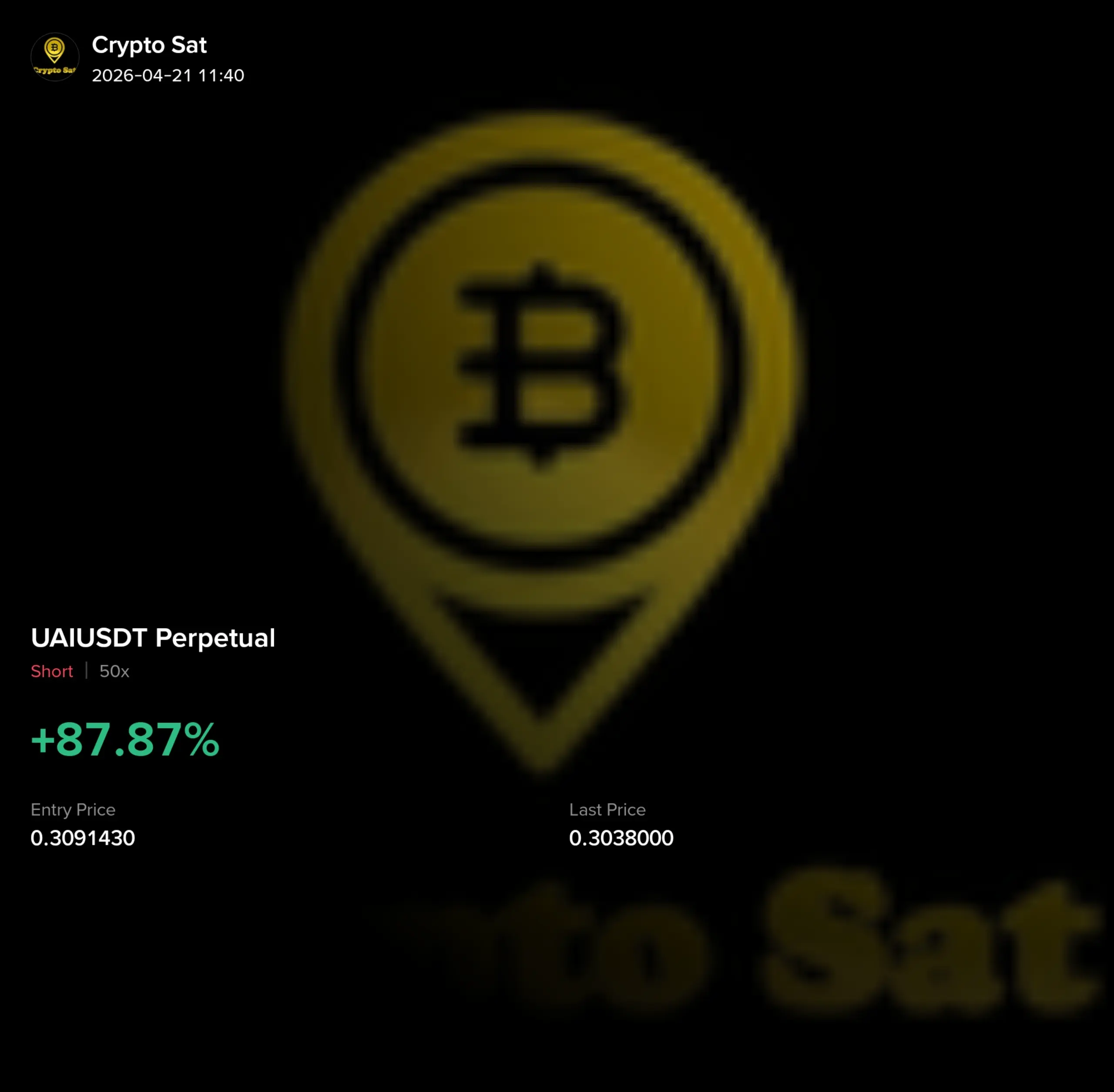
Congratulations first, remember to keep some position for the follow-up, don't sell everything in one go.
View Original
CryptoSat
$UAI 1st Target loading...
Are you guys ready to start booking profits 🤗
#BitcoinBouncesBack
repost-content-media
  • Reward
  • Comment
  • Repost
  • Share
If BCH truly holds the neckline this time, the subsequent space will indeed open up; focus first on the previous high.
BCH1.19%
View Original
AlleyLittleOverlord
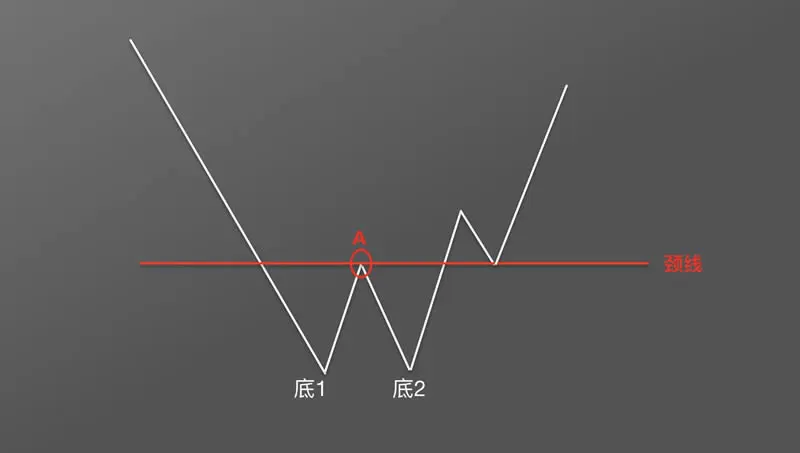
BCH 4H Structure Analysis: Double Bottom Formation, Bullish Opportunity Is Near
$BCH The 4-hour chart shows a standard double bottom (W bottom) structure, currently breaking through the neckline and entering a critical retest confirmation stage.
1. Pattern Logic (Understanding This Reversal)
Two Bottoms: The price tests support twice, bearish momentum exhausts, the second bottom does not make a new low, and buying interest gradually takes over.
Neckline Breakout: Resistance between the two bottoms is strongly broken, turning former resistance into strong support.
Retest Confirmation: After the breakout, volume decreases as the price retests the neckline area (445–435), which is the most stable low-risk entry point for the pattern.
As long as this support zone remains effective, the upward structure is intact, and the bullish trend continues; if it breaks below 420, the pattern invalidates, and you should exit decisively.
2. Practical Strategy (Clear and Actionable)
Entry Zone: 445–435 range (enter long after retest stabilizes at the neckline)
Stop Loss: Below 420 (break below indicates pattern failure, strict stop-loss)
Target Direction: After breakout, upward space opens, first look at the previous high, then the pattern’s equal-distance target.
Technical patterns are probabilistic, not absolute. Be patient for retest confirmation, avoid chasing highs, set strict stop-losses, and prioritize risk control. With a clear short-term structure, execute according to plan!
repost-content-media
  • Reward
  • Comment
  • Repost
  • Share
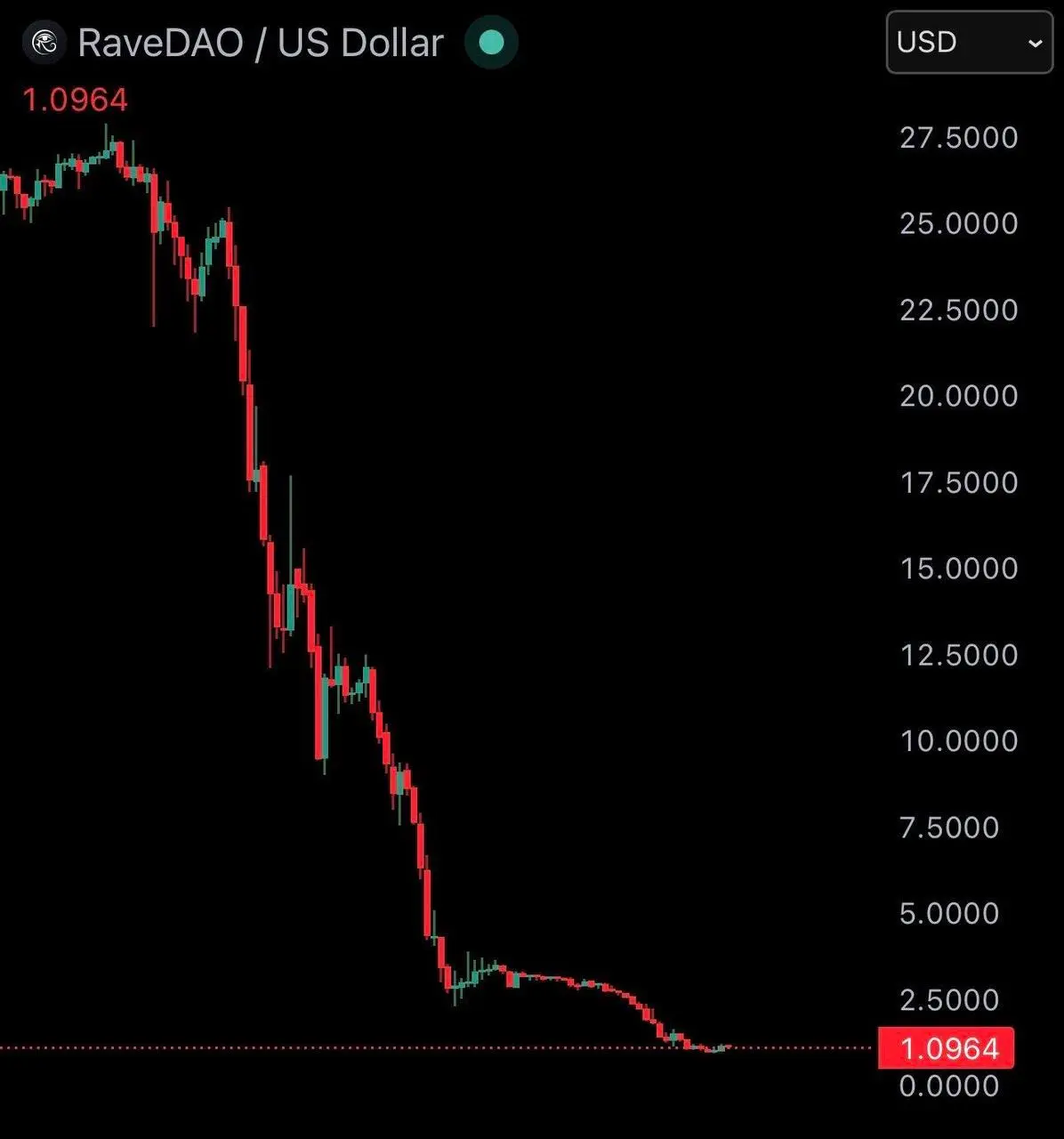
This level of flash crash, stop-loss and position management really can be lifesavers, or else you could wake up to being back to square one overnight.
View Original
CryptoRevolutionMaster
😱 $RAVE cryptocurrency crashes 95%, wiping out $6.3 billion from its market cap in a single day following alleged insider manipulation.
repost-content-media
  • Reward
  • Comment
  • Repost
  • Share
I found that whether grid/DCA is really right for you comes down to sleep quality. Last week, I got restless and wanted to go “all in,” but at 2 a.m. I was still scrolling through on-chain data: TVL didn’t really move, active addresses didn’t show any obvious expansion, and real income was just so-so… In situations like this, going in feels like using emotions as leverage.
Grid/DCA is more like installing a speed limiter for yourself—whether the market goes up or down, it can automatically meet it halfway. At least it won’t make every single candlestick go against you. Lately, aren’t there alw
View Original
  • Reward
  • Comment
  • Repost
  • Share
Recently, with the surge of RWA on the chain, the TVL shot up and looked very much like "deep liquidity," but I will first review the redemption terms: T+ days, whether there is a window period, if it can be paused, who sets the price... In plain terms, what you buy might be a "queue for withdrawal" right, not cash that can be withdrawn at any time. The group has been discussing stablecoin regulation, reserve audits, and various de-pegging rumors these days. I actually don't have much emotion about it because I've experienced too many moments that "look very stable." My habit is: I don't look
View Original
  • Reward
  • Comment
  • Repost
  • Share
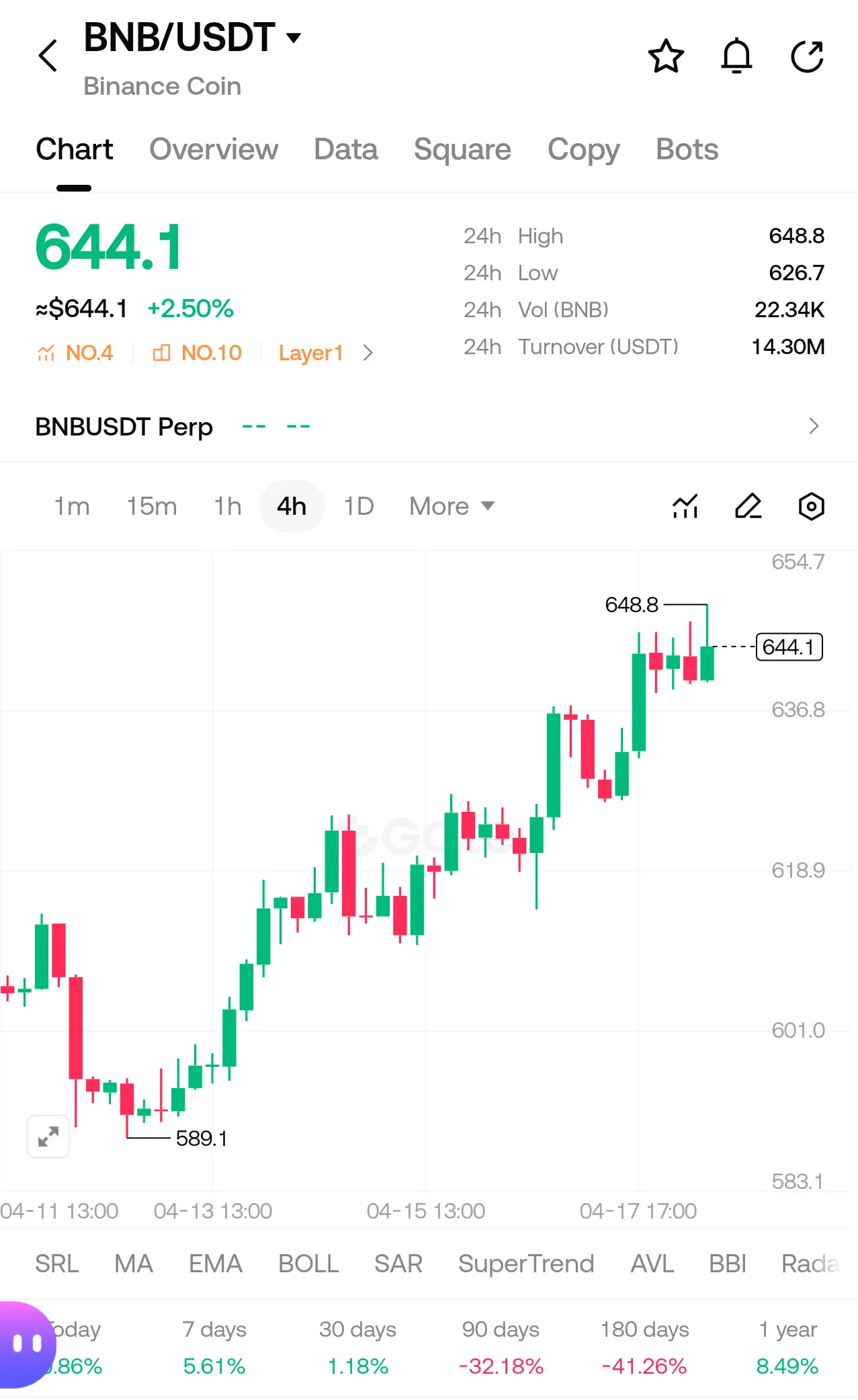
Target 700 sounds very appealing, but I will keep a close eye on the 615 stop-loss line and not fight the market.
View Original
MarcusCorvinus
$BNB strong bullish continuation near highs
I’m seeing control because $BNB is holding near resistance without rejection
Buyers maintaining pressure
Entry Point 635 to 645
Target Point 670 then 700
Stop Loss 615
I’m expecting breakout continuation
Trend still strong
This is possible because consolidation near highs leads to expansion
Let’s go and Trade now $BNB ‌
repost-content-media
  • Reward
  • Comment
  • Repost
  • Share
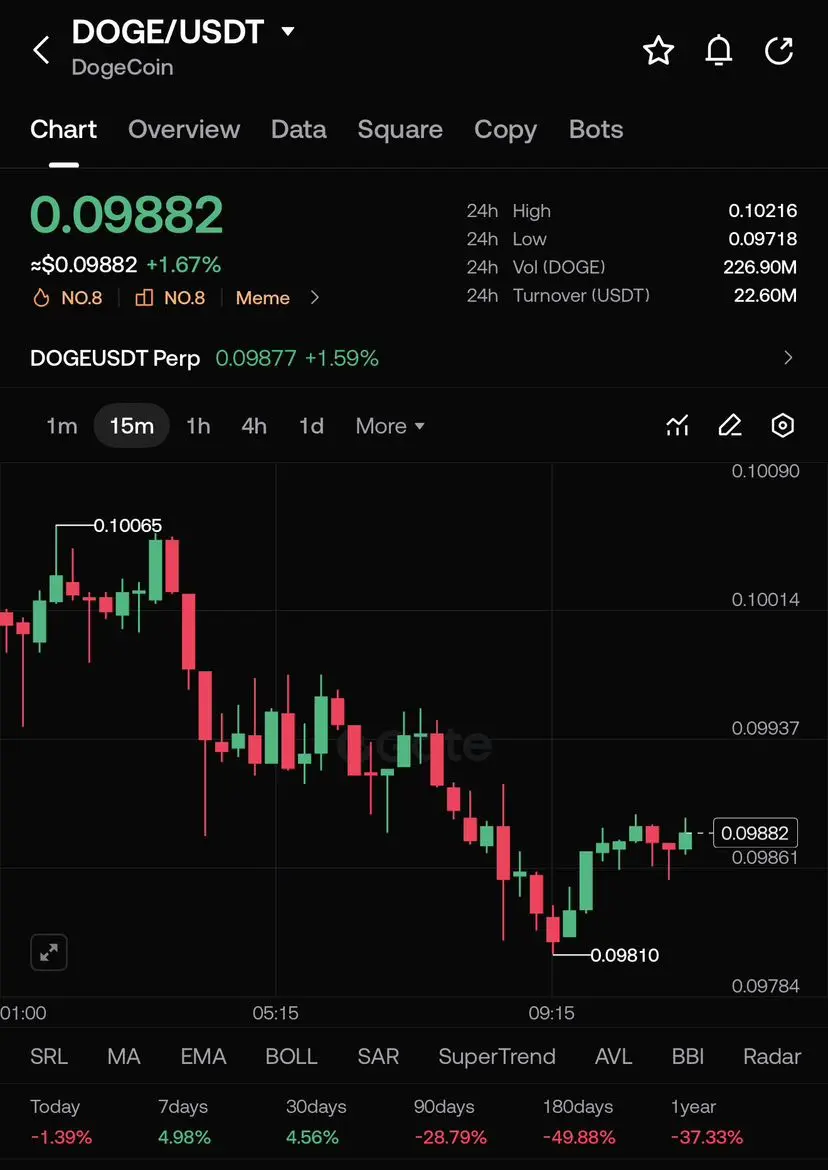
Wait until it stabilizes at 0.100 before considering more. Right now, every time I buy in, there's no volume and no response.
View Original
LedgerBull
$DOGE showing mild weakness with slow recovery attempts.
Structure remains range-bound with sellers controlling local highs.
EP
0.0990 – 0.1005
TP
TP1 0.0975
TP2 0.0955
TP3 0.0930
SL
0.1025
Liquidity above 0.100 remains partially untapped while price struggles to break higher. Weak reactions on upside with lower high formation suggest continuation lower if resistance holds.
Let’s go $DOGE ‌
repost-content-media
  • Reward
  • Comment
  • Repost
  • Share
It’s better to prioritize risk control, group experience, and customer service first, rather than losing sight of the main goal.
View Original
SituLieqiMarketTrend
When xChat came out, I immediately uninstalled that dead project ✈️. Now that there's a Chinese version for free, what's the point of wanting it?
  • Reward
  • Comment
  • Repost
  • Share
Someone asked me what to look at when it comes to DAO voting. To put it simply, I first look at how proposals “pay” and how they “distribute power.” Many proposals seem to be about optimizing parameters on the surface, but underneath they’re actually changing the incentive framework: who receives subsidies, who calculates KPIs, and how often the budget is locked.
Then you look at voting power—whether proxy voting/delegation is concentrated in the hands of a few people. Pair that with the recent airdrop season’s points system, and it feels like everyone is competing the way people clock in at
View Original
  • Reward
  • Comment
  • Repost
  • Share
ETF is not about buying coins enthusiastically; it's about compliance channels and fund pools opening the floodgates.
View Original
Furan86999
In the past, Wall Street looked at Bitcoin as if it were a “rogue-style” asset—criticizing it out loud, while keeping a close watch on it with their hands. Now, no more pretending—within a month, four major firms have almost simultaneously moved: Morgan Stanley rolled out a spot BTC ETF (MSBT, fee 0.14%), Goldman Sachs filed an application for a Bitcoin Premium Income ETF with the SEC, BlackRock has reapplied for a Bitcoin yield-related ETF (BITA), and Citigroup has stepped in more deeply in the capacity of an authorized participating institution (AP). Meanwhile, the total size of US Bitcoin spot ETFs has surged to $96.5 billion, and BlackRock’s IBIT alone has taken $55 billion, accounting for about 57% of the entire market; on the same day, Goldman Sachs–related actions also saw a net inflow of $411 million.
This batch of signals is actually very straightforward: Wall Street isn’t here to “buy coins by following the trend.” They’re here to standardize Bitcoin, productize it, and bring it into compliance. You can understand it as an “asset identity upgrade”—from what used to be a “non-mainstream asset,” it is being rewrapped as a standard financial product that can be bought, allocated, and used to enhance yield within institutional accounts. For institutions, the significance of ETFs is not about whether prices go up or down, but about a compliant channel + a risk-control framework + a continuous pool of funds: being able to enter the investment-advisory system, fit into a pension logic, and make strategy allocations is the most critical incremental value.#GatePreIPOs首发SpaceX #加密市场回升
  • Reward
  • Comment
  • Repost
  • Share
Someone asked me whether it’s more worthwhile to buy options or sell options… I’ll put it plainly: time value is deducted every day—you just decide whose account it comes from depending on which side you’re on. The buyer pays the ticket for “waiting for the market to give me a big move”; if the market doesn’t move, you keep getting ground down. What the seller takes is that grind, but you have to bear the risk of that one extreme spike going off. Recently, some new L1/L2 teams are rolling out incentives to pull TVL, and old users are complaining about digging, withdrawing, and selling. I look
View Original
  • Reward
  • Comment
  • Repost
  • Share
Recently, people keep saying, "I checked on the chain, xx address just did this or that," and I first have to wonder: what you're seeing might be "the on-chain data that someone else translated for you and queued up." Slow node synchronization, RPC queuing delays, indexers caching again—your "real-time" becomes delayed playback... Especially in volatile markets, the more data sources there are, the easier it is for different sources to tell different stories.
Modularization and the development of the DA layer are making developers pretty excited, but ordinary users are actually more confused:
View Original
  • Reward
  • Comment
  • Repost
  • Share
When the funding rate goes to extremes, my first reaction isn’t “Should I rush in,” but to first check whether on-chain activity is keeping up: if TVL, active addresses, and real revenue—the three of them—aren’t moving, then no matter how outrageous the rate is, it’s just emotions burning themselves out. Playing the counterparty side sounds really fun, but to put it plainly, you’re just dating volatility, and the mood can turn fast… These days, I more often choose to dodge—cut back my position, or even just not touch it at all—waiting until the buzz from the order book returns to the chain bef
View Original
  • Reward
  • Comment
  • Repost
  • Share
Before, whenever I heard "data availability/ordering/finality," I would get overwhelmed. Now I think it's enough to focus on one main thread: whether your transaction has actually been "recorded," and how long it takes to be considered real. Ordering, simply put, is about who comes first and who comes later, and whether someone can jump the queue; data availability is whether others can access the ledger contents and verify them; finality is how long you wait before you're confident it won't be rolled back. On the macro side, there's talk about easing expectations, the US dollar index moving i
View Original
  • Reward
  • Comment
  • Repost
  • Share
  • Pin