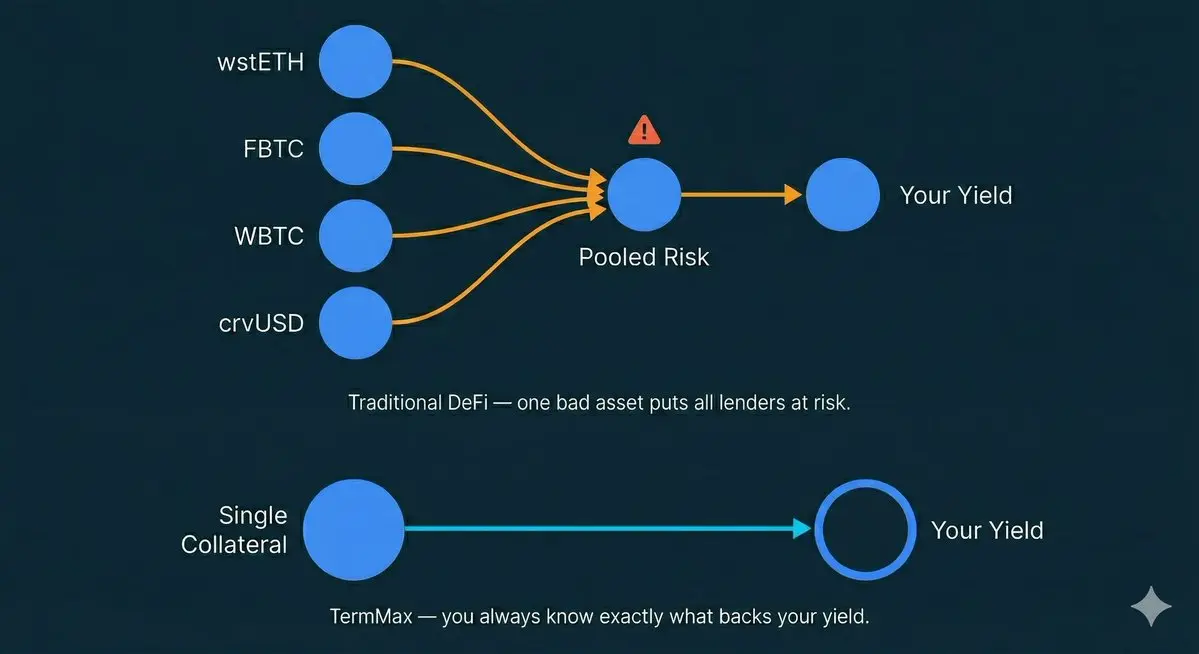
Traditional DeFi, at its core, is a liquidity pool model where you don't deposit a single asset but rather a mix of assets (wstETH, FBTC, WBTC, crvUSD). It appears diversified, but in reality, it's risk bundled together.
As long as one asset inside the pool encounters a problem, the risk can propagate through the pool, ultimately affecting everyone's returns and even the principal.
In contrast, @TermMaxFi takes a different approach: single collateral + market isolation.
Every profit has a clear corresponding collateral asset, with no mixing and no risk contagion, making it much safer compared to traditional DeFi.
As long as one asset inside the pool encounters a problem, the risk can propagate through the pool, ultimately affecting everyone's returns and even the principal.
In contrast, @TermMaxFi takes a different approach: single collateral + market isolation.
Every profit has a clear corresponding collateral asset, with no mixing and no risk contagion, making it much safer compared to traditional DeFi.