LateAlphaCourier

vip
Age 0.1 Year
Peak Tier 0
The news always comes a bit late, but verification is quick. I love making project due diligence checklists: team, contracts, token unlocks, and competitive landscape.
Recently, I was educated by myself again: stop-loss is really like a breakup. Even if it’s not right, you still drag it out— the longer you drag it, the more it hurts— and you even have to pay “interest”: emotional cost + opportunity cost. I used to always think I’d wait for it to rebound and give me an exit with dignity, but I never got the dignity I wanted; instead, my position wore me down until I had no temper left.
Over the past couple of days, seeing how the returns stack up from re-pledging and shared security being criticized as “copying a doll,” I’m not taking sides either. Anyway, I
View Original
  • Reward
  • Comment
  • Repost
  • Share
Recently, I keep encountering pages that "freeze for a moment" before showing data, and it's really not your internet connection... Many dApps rely on indexers/subgraphs to organize on-chain data beforehand. When you refresh, it has to chase new blocks and fill in missing events. If the node is busy or reorganizing, it's like a delivery arriving at a station and then having to sort packages. Plus, RPC (the interface for the frontend to query the chain) has rate limiting. When many people use it, queues form, resulting in the delays you see, and sometimes data briefly goes blank and then comes
View Original
  • Reward
  • Comment
  • Repost
  • Share
Recently, I’ve seen a few projects on RWA (Real World Asset) being on the blockchain again, and they’re being talked about enthusiastically, but I still have my old problem: first, look at the redemption terms. To put it simply, is what you buy actually “something that can be exchanged back at any time,” or is it a “voucher that requires waiting for the window to open and queuing”? Liquidity is easily made to look like it’s there by UI and secondary trading volume.
And also, don’t be too superstitious about the tags on on-chain data tools; recently, some people have also complained about lag a
View Original
  • Reward
  • Comment
  • Repost
  • Share
If the front desk doesn't ask, it's treated as if they didn't see it = default compliance? Don't take their rules for granted.
View Original
God-givenTeam
I have a friend who works in the hotel industry, and he shared some insider tips with me!
1. A man and a woman go to check into a room, the one who arrives first checks in, and the other follows later; the front desk acts as if they didn't see anything. Don't ask at the front desk what to do if you forget your ID card, and don't ask if it's okay to register for only one person. (Because the answer is no.)
2. Usually, at budget and mid-range chain hotels, no one checks when you go for breakfast, because the hotel staff have fewer rooms to clean and generally no dedicated staff for breakfast. So, you can book a room without breakfast, then blend in with the crowd and go eat openly. But this doesn't work at high-end chain hotels.
3. If you leave the hotel for more than 30 days, Uncle Hat will come looking for you, asking you to recall what happened at the hotel. You must honestly tell the truth, as surveillance footage is usually stored for about 15 days (up to 30 days at most).
This describes the general situation, suitable for most hotels.
  • Reward
  • Comment
  • Repost
  • Share
Today the traffic was ridiculously congested, my coffee went cold, and I kept seeing pages pushing "social mining/points" to encourage you to check in... Basically, it's just using attention as fuel. Someone asked if "attention equals mining" is a fallacy, and I feel it's not entirely false, but the costs are deliberately hidden: time, emotions, and the awkwardness of forcing interactions just for a badge.
Right now, I mainly focus on what can be verified: whether on-chain data matches up, if there are traps in the contracts, whether the points rules might suddenly change, and if unlocking/dis
View Original
  • Reward
  • Comment
  • Repost
  • Share
I realize my biggest problem isn't not understanding projects, but inability to hold: when spot prices rise, I want to cash out; when there's a pullback, I get itchy to add more; futures are even more ridiculous, I watch the market once opened, and a big fluctuation makes my mentality explode first, and finally my position blows up too. To put it simply, position management is just plain human talk: don't mistake the impulse to "make more money" for a strategy, first decide if you can sleep at night in the worst-case scenario.
Now I treat futures like chili peppers—if I can avoid eating them
View Original
  • Reward
  • Comment
  • Repost
  • Share
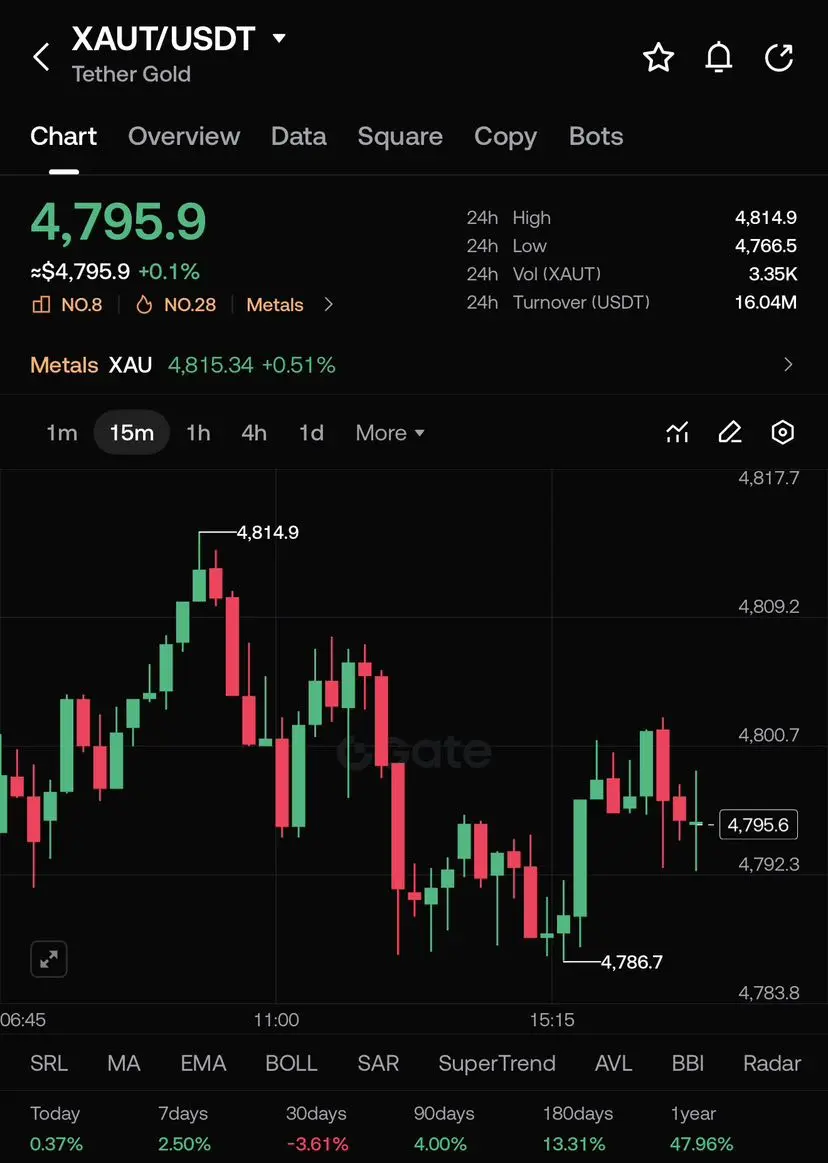
Be mindful of discipline when trading; admit mistakes if the level is broken; don't hesitate to cut losses at 4760.
View Original
LedgerBull
$XAUT showing steady intraday movement with range-bound structure.
Structure holding neutral with no clear directional control.
EP
4785 - 4800
TP
TP1
4820
TP2
4850
TP3
4900
SL
4760
Liquidity has been swept on both sides and price is consolidating within range. Any dip into the entry zone looks like a reaction into demand, with structure favoring upside continuation if resistance breaks cleanly.
Let’s go $XAUT ‌
repost-content-media
  • Reward
  • Comment
  • Repost
  • Share
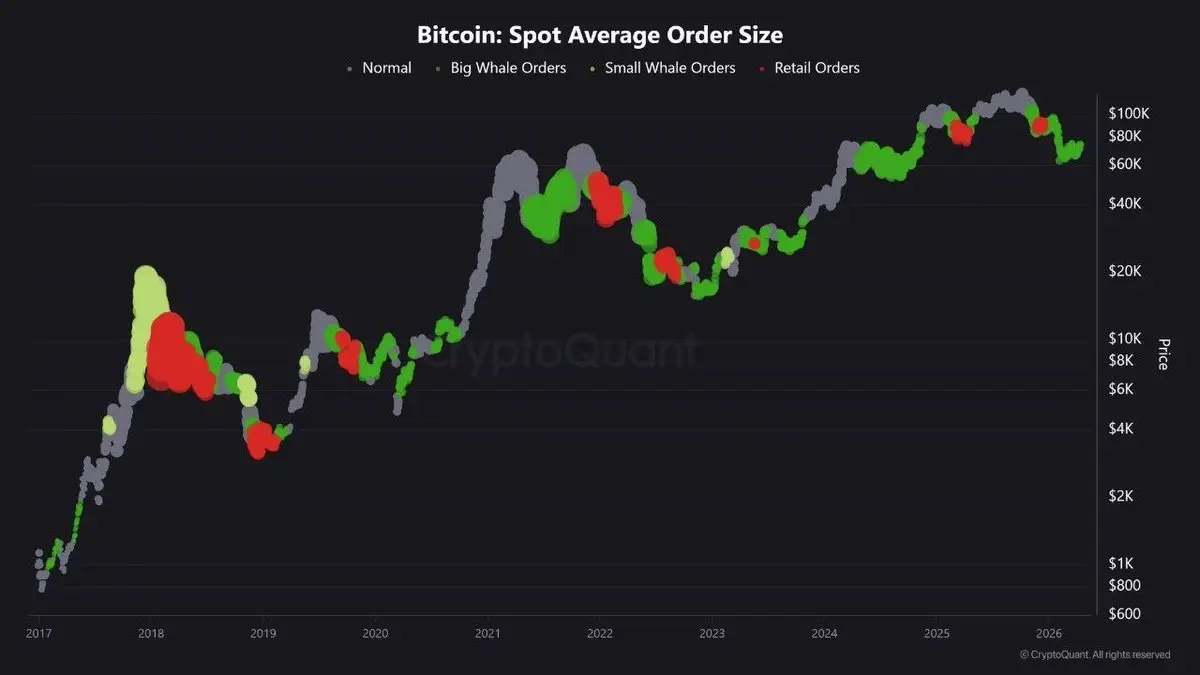
Whales are accumulating + exchange reserves hit a new low, this kind of structure indeed seems like a wave of supply shock is coming.
View Original
CryptoSat
🚨 Bitcoin Whales Are Stacking Aggressively
Whales have accumulated 270,000 $BTC in the last 30 days alone — the fastest buying pace seen since 2013.
Meanwhile, Bitcoin exchange reserves have fallen to their lowest level since December 2017, showing supply is getting tighter.
Big money buying heavily while available coins on exchanges shrink. Classic setup for supply shock. 👀
repost-content-media
  • Reward
  • Comment
  • Repost
  • Share
Last night I came across a yield aggregator again that claims "annualized returns are very attractive." For someone like me who always reacts a bit late to these messages, don't rush to jump in just yet. My first instinct is to check whether the contract and the money have actually changed hands multiple times... No matter how beautiful the APY is written, it could be backed by a strategy contract that frequently swaps pools, or it might involve an unseen counterparty (such as bridges, custodians, whitelist market makers, etc.). If something goes wrong, it's not just a "yield pullback," but th
View Original
  • Reward
  • Comment
  • Repost
  • Share
  • Pin