A new on-chain study published by AMLBot shows that between 2023 and 2025, Tether has frozen over 3.29 billion USDT on the Ethereum and Tron blockchains, and blacklisted 7,268 addresses. This figure far exceeds Circle, as USDC only froze about $109 million related to 372 addresses during the same period, indicating two very different enforcement philosophies shaping the stablecoin market.
According to data shared alongside an updated Dune dashboard, the scale of USDT freezing is about 30 times larger than USDC, both in value and number of wallets. Notably, the Tron network alone accounts for up to 1.75 billion USDT frozen, reflecting Tron’s central role in P2P transactions, cross-border payments, and the Asian market.
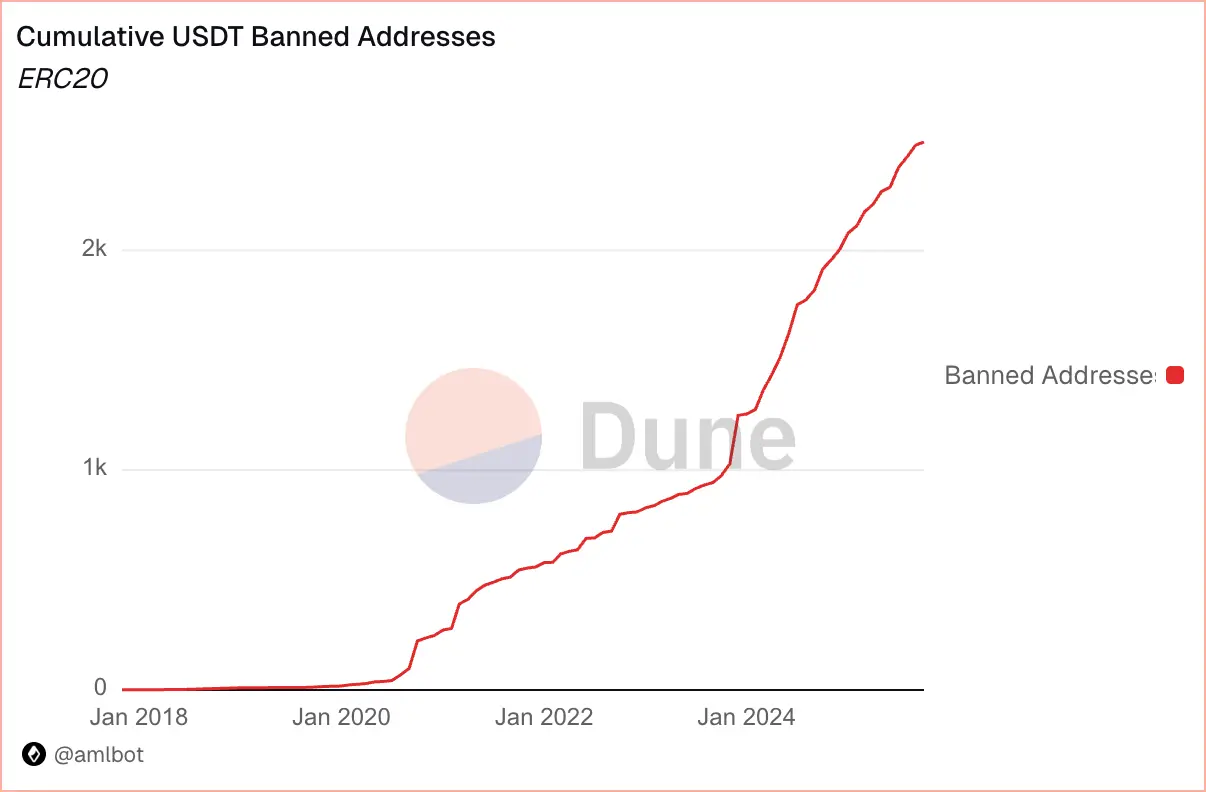
Tether pursues an active cooperation model with authorities, currently working with over 275 law enforcement agencies across 59 jurisdictions. The company can restrict wallets not only after court orders but also based on notices related to hacks or ongoing investigations. By July 2024, the total value of frozen USDT exceeded $130 million, including $29.6 million on Tron related to Cambodia’s Huione Group, which is under sanctions.
A major difference for USDT is the burn and reissue mechanism. After investigations are complete, frozen tokens can be destroyed and replaced with “clean” tokens to compensate victims or authorities. AMLBot recorded significant USDT burning activity toward the end of 2025, with over $25 million in value burned in just one month. However, this approach has also been controversial. In April 2025, a Texas-based company sued Tether after $44.7 million was frozen at the request of Bulgarian police, claiming that international legal procedures were not fully followed.
In contrast, Circle adopts a more cautious approach. USDC freezes typically occur only when there is clear legal basis such as court orders or sanctions lists, with fewer cases and usually in batches. When an address is frozen, the funds remain locked until a new legal decision is made, and there is no burn-and-reissue mechanism.
The report was published amid Circle’s efforts to expand into heavily regulated markets, recently partnering with Bybit to make USDC the default stablecoin on their platform. Meanwhile, recent scam incidents have highlighted the value of quick intervention, making Tether’s “strong hand” approach seen by some users as a practical safeguard, despite ongoing concerns about centralization.
Thach Sanh
Disclaimer: The information on this page may come from third parties and does not represent the views or opinions of Gate. The content displayed on this page is for reference only and does not constitute any financial, investment, or legal advice. Gate does not guarantee the accuracy or completeness of the information and shall not be liable for any losses arising from the use of this information. Virtual asset investments carry high risks and are subject to significant price volatility. You may lose all of your invested principal. Please fully understand the relevant risks and make prudent decisions based on your own financial situation and risk tolerance. For details, please refer to
Disclaimer.
Related Articles
Tether CEO: The team is developing a decentralized search engine, hypersearch.
Gate News message. April 7, Tether CEO Paolo Ardoino said the team is developing a decentralized search engine called hypersearch. The product is built on a distributed hash table (DHT, a decentralized data storage technology) architecture.
GateNews25m ago
Tether drives a $500 billion valuation fundraising round; if demand is insufficient or is postponed
Gate News message, on April 5, Tether is pushing investors to participate in a new round of financing at an estimated valuation of about $500 billion. If market demand does not meet expectations, the financing process may be delayed. It is reported that the company has been exploring financing plans since last year, but some investors are cautious about this valuation. If the financing is successful, Tether’s scale will exceed most U.S. banks, second only to JPMorgan Chase. Previously, Tether discussed raising about $15 billion to $20 billion through private placements, but those plans remain uncertain.
GateNews04-05 07:57
Cambodia passes its first anti–tech scam law, strengthening law enforcement regulations to combat online telecom fraud
Cambodia’s National Assembly passed the “Anti-Technology Fraud Law” at the end of March, aiming to crack down on online scams and human trafficking. The law establishes dedicated offenses, with severe penalties and life imprisonment. The new law expands the scope of law enforcement, targeting acts such as “pig butchering” scams, and responds to international pressure to repair its image. The government has pledged to shut down illegal scam centers by the end of April.
ChainNewsAbmedia04-03 18:25
Ledger phishing email scam steals 600,000 USDT, and U.S. federal prosecutors recover all funds
An American court ruled to forfeit more than $600,000 in USDT, stemming from a physical letter phishing scam targeting Ledger users. After receiving the disguised letter, the victims leaked their seed phrases, and their funds were stolen. The scammers tried to conceal the funds through multiple transfers and conversion methods, but the transparency of the blockchain helped the police track the path of the fund movements. They then successfully recovered the funds through a civil forfeiture proceeding.
MarketWhisper04-03 03:02


