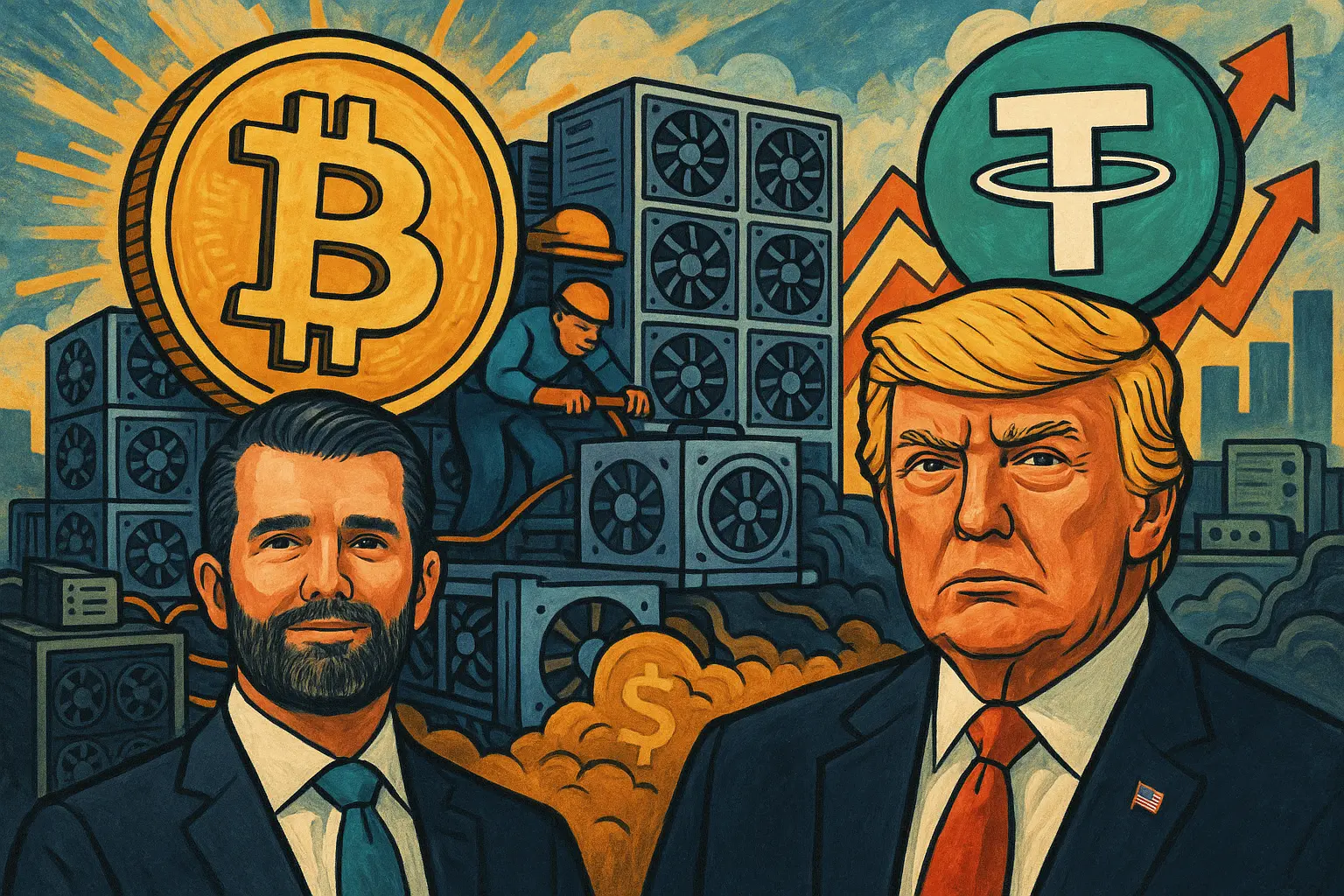
2025 Bitcoin hash rate surpasses 1 ZH/s, but mining costs soar to $137,000 forcing industry transformation. CoreWeave acquires Core Scientific for $9 billion, IREN signs a $9.7 billion GPU agreement with Microsoft. Trump’s second son establishes American Bitcoin Corp, Bhutan’s reserves account for 40% of GDP, and Tether invests in OCEAN mining pool.
Cost Hell Behind the Hash Rate Milestone
In December 2025, Bitcoin’s hash rate officially exceeds 1 ZH/s (ZettaHash), marking a symbolic threshold and signaling the industry entering a phase of intense competition. However, behind this milestone lies a brutal cost reality. According to CryptoRank data, the average cash cost for publicly listed miners to mine 1 BTC has reached approximately $74,600; when accounting for depreciation and stock-based compensation (SBC), the total cost rises to about $137,800.
This cost structure, compared to Bitcoin’s current price of around $88,000, means most miners are actually operating at a loss. The high costs extend the breakeven period for mining equipment to over 1,200 days, with financing costs continuously rising. Even the most efficient miners can only barely break even, directly leading to the exit of small and medium miners and the diversification of large miners into AI businesses.
A hash rate of 1 ZH/s implies executing 1 trillion hashes per second globally. The intensifying hash rate race makes older generation mining machines nearly unprofitable. Bitmain has been forced to significantly cut product prices, with older models like S19 XP Hydro priced as low as $3–4/TH/s, and S21 series down to $7–8/TH/s, entering a “clear inventory” phase. Market competition is shifting from pure hash power stacking to energy efficiency (J/TH) and customization for AI data centers.
Business Model Revolution: From Mining to AI Hosting
The most notable trend in the 2025 mining industry is the large-scale transformation of mining companies into AI/HPC. In July, AI infrastructure unicorn CoreWeave announced a full stock acquisition of Bitcoin miner Core Scientific, with a valuation of about $9 billion. The latter provides AI operations with a scarce 1.3 GW of power capacity. In November, miner IREN announced a five-year GPU cloud computing service agreement with Microsoft worth up to $9.7 billion, deploying NVIDIA GB300 GPU clusters.
This trend signifies a fundamental shift in the mining business model. Companies like Hut 8 and Bit Digital (WhiteFiber) are also signing long-term (10–15 years) colocation agreements to monetize their hash assets. Analysis indicates that AI hosting yields generally surpass traditional mining, providing stable cash flow and making the “hash rate leaderboard” gradually replaced by “AI contract value.” This transformation is not only a passive response to shrinking mining profits but also a strategic move to actively embrace the AI wave.
Three Major Business Model Changes in the 2025 Mining Industry
From selling hash power to selling electricity: Miners redirect 1.3 GW capacity to AI data centers, with unit revenue far exceeding mining
From single mining to hybrid revenue: $9.7 billion GPU hosting contracts provide stable cash flow, reducing cryptocurrency price volatility risk
From hash power competition to energy efficiency competition: The mining market shifts from stacking hash power to J/TH energy efficiency and AI center adaptability
Geopolitical and Sovereign Nation Mining Rise
The most disruptive trend in the 2025 mining industry is the direct involvement of sovereign funds and governments. Data from June shows that the Kingdom of Bhutan, leveraging its abundant hydropower resources, has accumulated Bitcoin reserves worth about $1.3 billion, accounting for nearly 40% of its GDP. In December, Bhutan signed a memorandum of understanding with crypto market maker Cumberland to further develop digital asset infrastructure.
The UAE government, through its holding company Citadel Mining, owns about 6,300 BTC; Ethiopia, Argentina, and other countries are collaborating with state-owned power companies to attract global miners, using a “energy-for-hash” model to fill national treasuries. This model is highly attractive for resource-rich but foreign exchange-starved countries, as mining can directly convert electricity into hard currency.
Russia has adopted a “dual approach.” On one hand, the government plans to implement year-round permanent mining bans in Buryatia and the Trans-Baikal region, with illegal mining criminalized; on the other hand, Putin’s economic advisors have publicly stated that Bitcoin mining is an “underestimated export item” for the country, supporting the ruble exchange rate. Currently, Russia accounts for nearly 16% of global hash rate, second only to the US. The Central Bank of Russia is attempting to include mining in international balance of payments statistics to circumvent sanctions using cryptocurrencies.
Trump’s son Eric Trump and miner Hut 8 jointly established American Bitcoin Corp (ABTC), raising $220 million and planning to go public via reverse merger on NASDAQ. Although the stock plummeted 50% in December due to restricted stock unlocks, the involvement of the Trump family is seen as an important signal of political support for domestic US mining.
Stablecoin Giants and Regulatory Compliance Push Forward
Tether became a key driver of the mining industry in 2025. The world’s largest stablecoin issuer has invested in renewable energy mines in Uruguay and El Salvador, and in April deployed hash power in the decentralized pool OCEAN to reduce centralization risks. Tether’s holdings in Northern Data led to the sale of its mining division Peak Mining for $200 million in November, shifting focus to AI data center business.
Regulatory compliance has also strengthened. IcomTech Ponzi promoter Magdaleno Mendoza was sentenced to 6 years in prison and asset confiscation; the project falsely promised high mining returns. Malaysia uncovered nearly 14,000 illegal mining machines, causing $1.1 billion in electricity theft losses since 2020. These cases indicate the mining industry is bidding farewell to “wild growth” and entering a phase of full compliance.
Despite enormous cost pressures, MARA Holdings announced in August that its Bitcoin holdings exceeded 50,000 BTC, worth billions of dollars. These companies are raising liquidity through convertible bonds or using Bitcoin as collateral, rather than selling mined coins. This “high leverage hoarding” model makes mining stocks high-beta investments for Bitcoin.
Disclaimer: The information on this page may come from third parties and does not represent the views or opinions of Gate. The content displayed on this page is for reference only and does not constitute any financial, investment, or legal advice. Gate does not guarantee the accuracy or completeness of the information and shall not be liable for any losses arising from the use of this information. Virtual asset investments carry high risks and are subject to significant price volatility. You may lose all of your invested principal. Please fully understand the relevant risks and make prudent decisions based on your own financial situation and risk tolerance. For details, please refer to
Disclaimer.
Related Articles
Ex-UK Chancellor backs bitcoin as alternative to failing systems
Kwasi Kwarteng, the UK’s former Chancellor of the Exchequer who served just weeks in September 2022, is re-emerging with a new focus on bitcoin, monetary history, and long-term economic thinking.
Reflecting on the infamous mini-budget in an interview with CoinDesk, he was candid about the
CoinDesk22m ago
Solana Holds Key Support as Bitcoin Rally Lifts Crypto Market
Solana's price remained above $80 amid rising Bitcoin values, contributing to a broader crypto market recovery with a capitalization of $2.35 trillion. Institutional demand and easing geopolitical tensions supported this growth, while Solana led in decentralized finance activity, recording significant DEX and stablecoin volumes in March.
CryptoNewsLand1h ago
Robert Kiyosaki warns of a “fake coin” crash, insisting Bitcoin is the safest asset for 2026
Robert Kiyosaki, in a recent post, said that Bitcoin and Ethereum could become the safest investments of 2026, because the United States continues to print money, debt is rising, and inflation is worsening. He criticized the safety of U.S. Treasuries as “the biggest lie,” and noted that real assets and cryptocurrencies can preserve wealth during inflation. His investment recommendations include holding Bitcoin, gold, silver, and commodities. Although some of his predictions weren’t accurate, some of his long-term predictions have come true.
MarketWhisper1h ago
Bitcoin Prints Similar Bullish Chart to Previous Pump, Is Liquidity Ready to Return to the Crypto Market?
Bitcoin prints similar bullish chart to previous pump.
This leads experts to expect liquidity to return to the crypto market soon.
Will the crypto bull cycle enter a bullish extension phase?
The crypto market continues steadily in a sideways pattern, with the price of BTC currently
CryptoNewsLand2h ago
BTC 15-minute surge of 0.84%: Upward momentum driven by insufficient liquidity and the resonance between futures premium arbitrage
2026-04-05 15:15 to 15:30 (UTC), the BTC price fluctuated within the 66,938.9 to 67,529.9 USDT range, with a 15-minute return of +0.84% and a volatility (amplitude) of 0.88%. During the same period, market trading activity increased: the number of active on-chain addresses over 10 minutes reached 420,690, short-term buying sentiment improved, and attention to the market was boosted.
The main drivers behind this move are persistent liquidity tightness in the spot and derivatives markets. Current trading volume is significantly lower than the range since the end of 2023, and the threshold for buy-side pressure to push prices higher has dropped markedly.
GateNews2h ago


