Crypto ETF outflows December capped a challenging end to 2025, with heavy redemptions reflecting selective de-risking amid broader risk aversion.
(Sources: SoSoValue)
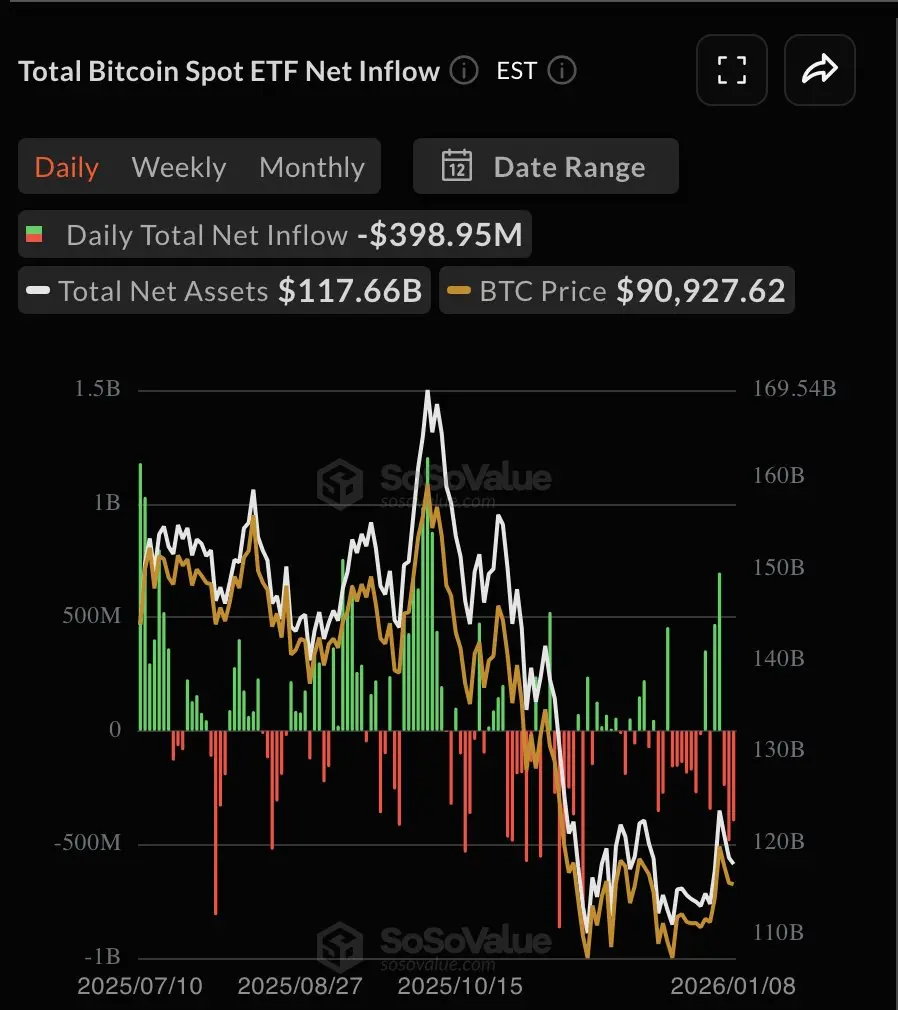
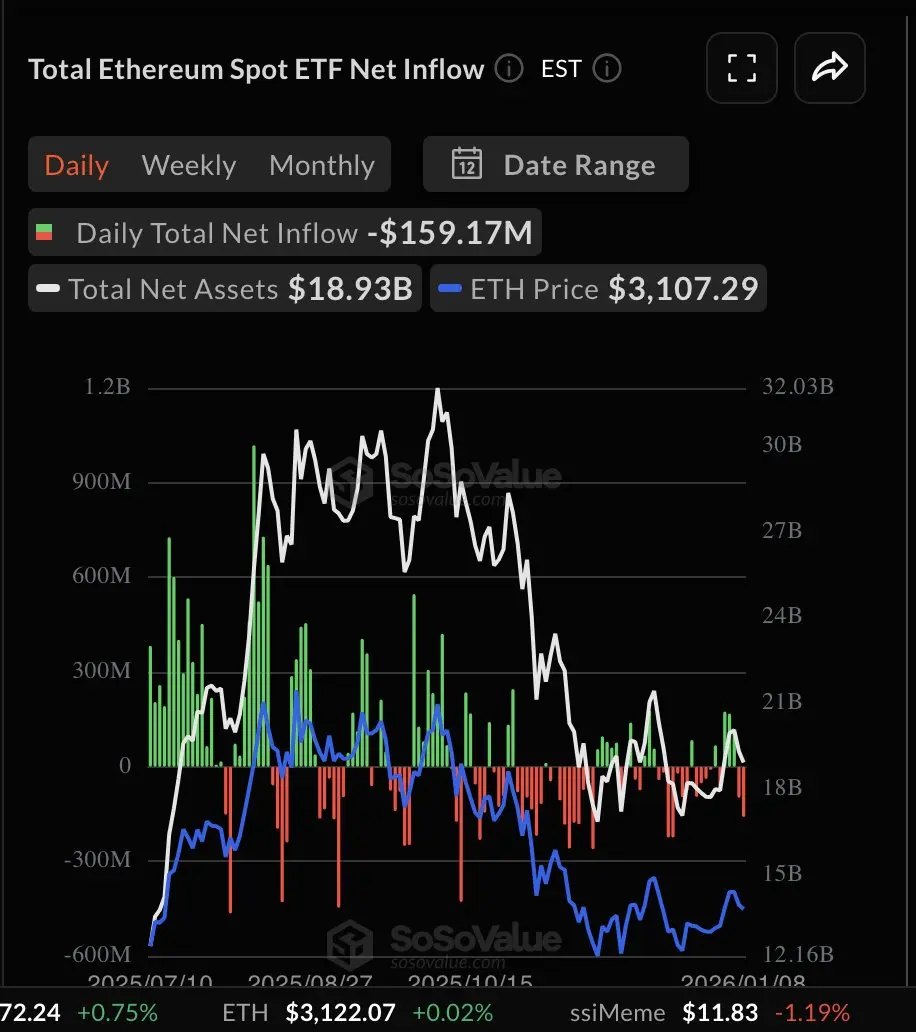
However, early January data reveals Bitcoin ETF bottoming out patterns and clear Ethereum ETF stabilization, suggesting the intense selling phase has largely run its course. This analyst insight analyzes the shift in ETF flow indicators crypto, institutional positioning signals, the role of MSCI’s retention decision, and whether “are crypto ETF outflows over” leans toward recovery as of January 9, 2026.
December Outflows in Context: Selective Crypto De-Risking
Crypto ETF outflows December stood out against record $235 billion global equity ETF inflows, highlighting digital assets’ unique pressures. JPMorgan analysts attribute much of the selling to position unwinds following October’s MSCI review concerns rather than systemic liquidity breakdowns.
Bitcoin and Ethereum products absorbed the bulk, with outflows contrasting resilient equity and fixed-income demand.
- Scale Contrast: Crypto redemptions vs. equity record inflows.
- Primary Driver: Anticipatory de-risking ahead of index decisions.
- Market Breadth: No broad liquidity deterioration observed.
Bitcoin ETF Bottoming Out: Early Reversal Signals
January flows indicate Bitcoin ETF bottoming out, with net redemptions tapering and initial positive prints emerging. CME futures and perpetual positioning show reduced sell-side dominance, supporting the view that institutional unwinds are nearing completion.
- Flow Trend: Shift from heavy outflows to stabilization.
- Futures Metrics: Easing short pressure in CME contracts.
- Volume Impact: No significant liquidity strain during correction.
- Bottoming Evidence: Early inflow days post-December.
Ethereum ETF Stabilization Alongside Broader Recovery
(Sources: SoSoValue)
Parallel dynamics drive Ethereum ETF stabilization: outflows have moderated, with ETF flow indicators crypto flashing reduced velocity. Combined with Bitcoin patterns, this suggests synchronized institutional repositioning rather than isolated weakness.
- Stabilization Markers: Declining redemption pace.
- Correlation: Aligned with Bitcoin ETF trends.
- Sentiment Support: Improving perpetual funding rates.
ETF Flow Indicators Crypto Point to De-Risking Exhaustion
Multiple ETF flow indicators crypto—including open interest, volume absorption, and futures basis—show no evidence of forced liquidation cascades. Analysts view the correction as orderly position reduction, now potentially exhausted.
MSCI’s February 2026 confirmation retaining treasury firms in benchmarks provided critical relief, eliminating fears of passive forced selling.
- Key Relief: MSCI inclusion retention.
- Indicator Consensus: Position cuts largely complete.
- Institutional ETF Demand: Poised for potential re-entry.
Outlook: Are Crypto ETF Outflows Over?
The convergence of Bitcoin ETF bottoming out, Ethereum ETF stabilization, and supportive ETF flow indicators crypto tilts toward cautious optimism that the worst of crypto ETF outflows December-style pressure is behind us. Absent new macro shocks, renewed institutional ETF demand could emerge as the next driver.
While full reversal requires confirmation through sustained positive flows, current evidence suggests a constructive inflection point rather than ongoing deterioration.
In summary, early 2026 signals of Bitcoin ETF bottoming out and Ethereum ETF stabilization indicate the crypto ETF outflows December wave has likely crested, with ETF flow indicators crypto pointing to de-risking exhaustion bolstered by MSCI relief. This positions the sector for potential inflow recovery, marking a pivotal shift in institutional crypto allocation dynamics. Monitor weekly flow reports and futures positioning for validation—always reference primary data sources and regulated platforms when assessing cryptocurrency ETF trends.
Disclaimer: The information on this page may come from third parties and does not represent the views or opinions of Gate. The content displayed on this page is for reference only and does not constitute any financial, investment, or legal advice. Gate does not guarantee the accuracy or completeness of the information and shall not be liable for any losses arising from the use of this information. Virtual asset investments carry high risks and are subject to significant price volatility. You may lose all of your invested principal. Please fully understand the relevant risks and make prudent decisions based on your own financial situation and risk tolerance. For details, please refer to
Disclaimer.
Related Articles
Bitcoin Depot discloses a critical security vulnerability; hackers stole $3.6 million in BTC
Bitcoin Depot was hit by a security vulnerability on March 23, 2023. The hacker gained access to the IT system to steal login credentials, and without authorization transferred about 50.9 bitcoins, resulting in losses of approximately $3.67M. The incident did not affect customers’ personal data, showing the security challenges faced by Bitcoin ATM operators. This was the company’s second known major security incident, reflecting its need for stronger security measures under regulatory pressure.
MarketWhisper9m ago
Derivatives contract whale “sets 10 big targets first,” flipping a losing short position into a profit, with an unrealized gain of $1.968 million
According to on-chain analysts’ monitoring, the short position of the contract whale “first sets 10 major targets” has already generated a profit of $1.97M, holding 2,201.507 BTC shorts and 7,093 ETH shorts, with a total size of $173 million. The BTC stop-loss range is $73,000 to $73,500.
GateNews39m ago
Michael Saylor: Bitcoin may have already hit bottom, but quantum risks have been exaggerated
Strategy Executive Chairman Michael Saylor believes Bitcoin hit its bottom around $60,000 this February, because all forced sellers in the market have already exited. He said that the catalyst for the next bull market will be a bitcoin-based banking credit system, while he believes the threat from quantum computing is being exaggerated, and he pointed out that the technical community has enough time to deal with this threat.
MarketWhisper52m ago
Gold falls to $4,715, and the BTC volatility index drops sharply by 6.42%
On April 9, gold and silver prices fell slightly, and BVIX and EVIX showed that Bitcoin and Ethereum volatility declined. The U.S. dollar rose slightly against the Chinese yuan and the Japanese yen. The Euro 50 index rose, while stock indexes in the UK and Germany fell. WTI and Brent crude oil prices increased somewhat. The Gate platform integrates products from traditional financial markets, allowing users to trade a variety of assets conveniently.
GateNews1h ago


