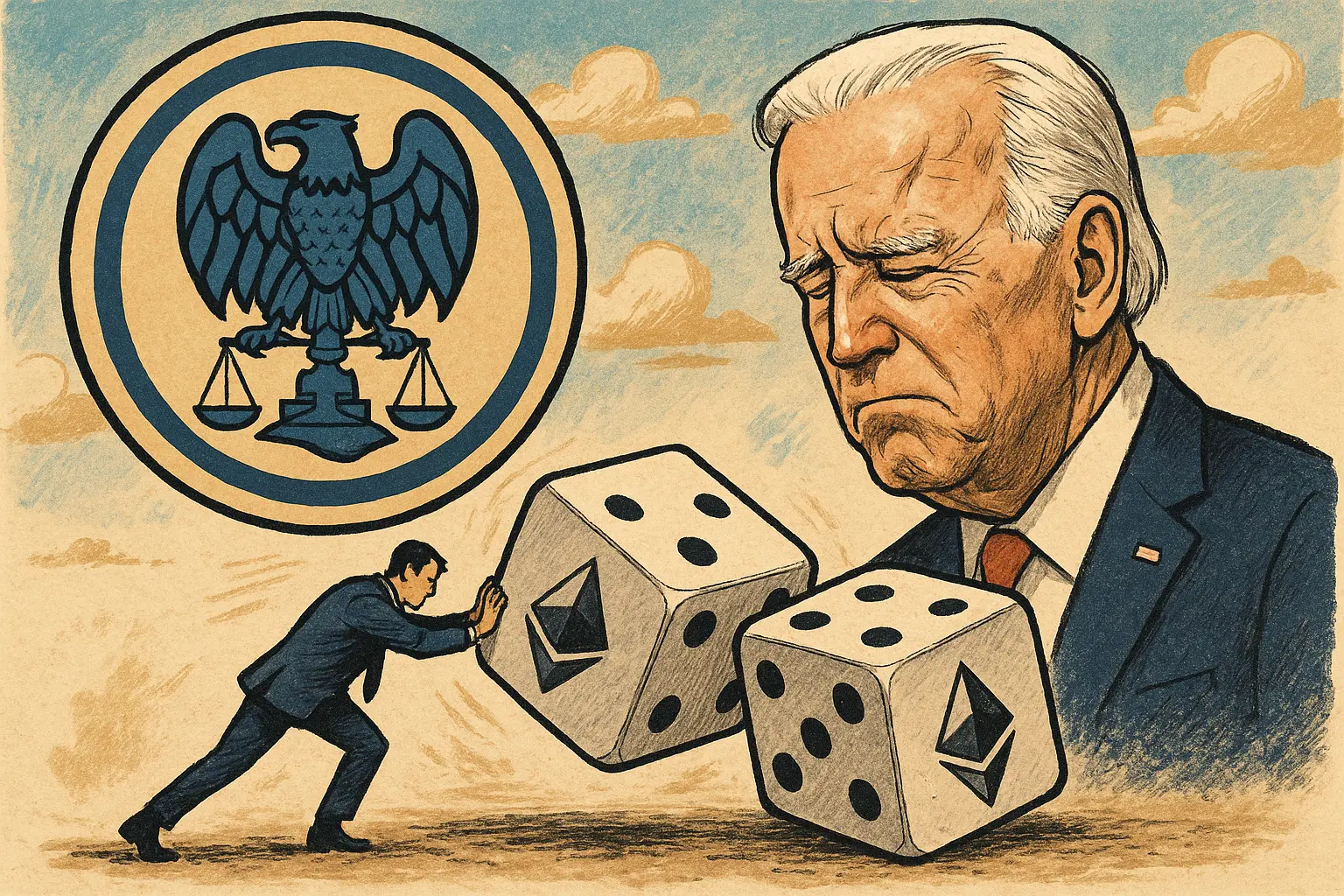
CFTC Chair Selig withdraws proposal to ban sports and political event contracts during Biden administration, criticizing it as a “reckless regulatory approach favoring certain outcomes before the election.” Not issuing a final rule, the agency will push for new regulations based on the Commodity Exchange Act to foster innovation. Simultaneously, the withdrawal of the September staff letter requesting litigation preparedness impacts Polymarket and Kalshi, though platforms still face multi-state legal challenges.
CFTC’s New Chair Criticizes Biden’s Favoritism in Regulation
The U.S. Commodity Futures Trading Commission has withdrawn a proposal from the Biden administration that would have banned sports and political prediction markets, which are among the most popular event contracts today. Recently confirmed CFTC Chair Mike Selig announced on Wednesday that the agency has rescinded a 2024 proposed rulemaking notice aimed at banning activity contracts related to sports, politics, and war, categorizing them as “contrary to the public interest.”
Selig stated that the proposal “reflects the previous administration’s reckless attitude toward selective regulation ahead of the 2024 presidential election, outright banning political contracts,” adding that the CFTC does not intend to issue a final rule on this proposal. “The Commission will withdraw the proposal and advance a new rulemaking that will be based on a reasonable and consistent interpretation of the Commodity Exchange Act to promote responsible innovation in our derivatives markets, consistent with Congress’s intent.”
Selig’s criticism of the Biden administration’s proposal is very strong. The term “regulatory favoritism” suggests that the Biden administration’s motives are political rather than based on public interest. The timing of the 2024 proposal is particularly sensitive, coming just months before the election, at a time when platforms like Polymarket are challenging traditional polling authority with their election outcome predictions. Some observers believe that the Biden administration’s attempt to ban political prediction markets aims to reduce tools that could be unfavorable to the Democratic Party.
From the Trump administration’s perspective, withdrawing this proposal aligns with its broader policy of deregulation and supporting innovation. Since Trump took office, multiple federal agencies have systematically rescinded Biden-era regulatory proposals, including SEC enforcement actions against crypto industry, EPA environmental regulations, and Labor Department labor protections. The deregulation of prediction markets is part of this larger political agenda.
Legal Challenges to Polymarket and Kalshi Temporarily Halted
This is the latest move by the CFTC affecting prediction markets like Polymarket and Kalshi, which gained popularity by allowing betting on various events, especially sports. These platforms face legal challenges from multiple states, which consider them unlicensed gambling. The platforms dispute this, claiming they are fully regulated by the CFTC.
The withdrawal of the ban provides these platforms with some breathing room, at least at the federal level, where they are no longer under the threat of outright prohibition. However, legal challenges at the state level continue. U.S. gambling regulation operates on a dual federal and state system; even if the CFTC permits these markets federally, states can impose restrictions or bans based on their own laws. This complex regulatory landscape creates significant legal uncertainty for prediction markets across different jurisdictions.
Selig also announced the withdrawal of a September staff letter that reminded CFTC-regulated entities of their obligations when facilitating sports event contracts and the need to prepare for litigation. The letter, issued before the government shutdown, advised regulated entities to “be prepared to address all foreseeable circumstances that may arise from facilitating trading and clearing of sports-related event contracts.”
The statement also noted that CFTC staff are aware of various regulatory actions and lawsuits taken by states against sports event contracts. The letter warned companies to prepare through “appropriate contingency plans, disclosures, and risk management policies and procedures.” This tone indicates that even during the Biden era, there are divisions and uncertainties within the CFTC regarding how to regulate prediction markets.
Selig said the recommendation “aims to emphasize litigation considerations,” but “inadvertently created confusion and uncertainty among market participants.” “I look forward to working with staff to develop event contract rules,” he added. This stance shows that the Trump-era CFTC is not aiming for complete deregulation but seeks to establish clearer, more friendly regulatory frameworks that balance consumer protection with fostering innovation.
The Future of Prediction Market Regulation
The CFTC’s withdrawal of the ban does not mean prediction markets are now free from regulation. Selig explicitly stated that the agency will push forward with “new rulemaking,” implying that future regulatory frameworks will be introduced, shifting from “total prohibition” to “orderly regulation.” The new rules may include licensing requirements for platforms, restrictions on certain sensitive events (like war casualties), user eligibility reviews, and measures to prevent market manipulation.
For Polymarket and Kalshi, this increased regulatory certainty is beneficial. They no longer need to worry about federal-level bans and can focus on product development and market expansion. However, state-level legal challenges remain a significant risk. States like Nevada and New York have already or are considering restrictions on prediction markets, and these actions are unaffected by the CFTC’s decision.
More broadly, the direction of prediction market regulation will influence the entire crypto and fintech industry. If the CFTC succeeds in establishing a balanced framework that fosters innovation while managing risks, it could serve as a model for regulating other innovative financial products. Conversely, if conflicts between federal and state regulations persist, prediction markets may remain in a legal gray area for a long time, limiting their growth potential.
Disclaimer: The information on this page may come from third parties and does not represent the views or opinions of Gate. The content displayed on this page is for reference only and does not constitute any financial, investment, or legal advice. Gate does not guarantee the accuracy or completeness of the information and shall not be liable for any losses arising from the use of this information. Virtual asset investments carry high risks and are subject to significant price volatility. You may lose all of your invested principal. Please fully understand the relevant risks and make prudent decisions based on your own financial situation and risk tolerance. For details, please refer to
Disclaimer.
Related Articles
Iran warns the United States could become embroiled in a long-term attrition war, claiming to have developed a plan to sink U.S. aircraft carriers
Deputy Commander of the Iranian Revolutionary Guard, Fadavi, stated that there are no U.S. ships within 700 kilometers of Iranian waters, implying that the U.S. has fled due to Iran's operational plans. Meanwhile, he warned that the U.S. could become involved in a prolonged attrition war, affecting the global economy. Additionally, Iran announced that it shot down a U.S. F-15 fighter jet south of Tehran.
GateNews12m ago
Bank failures, war conflicts: Iran's $7.8 billion cryptocurrency "shadow economy" becomes the focus again
Iran's "shadow economy" has become the last line of defense against U.S. sanctions through Bitcoin mining and stablecoin trading. After legalizing mining in 2019, Iran utilized cheap electricity for mining and sold the mined Bitcoin to the central bank for trade settlement purposes. Although the rial has depreciated significantly, stablecoins like USDT are used to stabilize exchange rates. As the financial crisis worsens, the public has also turned to Bitcoin to protect their assets.
区块客18m ago
Trump says the US-Iran war will end soon, with the end time decided by him
Gate News Report, March 11: Trump stated that Iran has "almost no targets left to strike," and the war with Iran will end soon. He emphasized, "Whenever I want it to end, it will end."
GateNews27m ago
Goldman Sachs: Hedge fund positioning may create conditions for a rebound in US stocks, with short positions rising to the highest since September 2022
Goldman Sachs report indicates that the structure of hedge fund positions in the US stock market is creating conditions for a market rebound. Speculators maintain long positions while shorting ETFs and futures. Short positions have reached their highest level since September 2022, reflecting market responses to uncertainty. If positive news emerges, it could trigger a rapid market rally.
GateNews33m ago
Oman Salalah Port oil storage facility attacked by drone
Gate News: On March 11, according to a report by British maritime security company Ambrey, oil storage facilities at the Port of Salalah in Oman came under attack. On-site footage showed two plumes of thick smoke rising from the facility, with one silo catching fire. According to Omani television, drone attacks targeted fuel storage tanks at the Port of Salalah, with no casualties reported from the attack.
GateNews33m ago
Analyst: G7 releasing oil reserves may not necessarily lower oil prices
The market is awaiting the G7's decision on releasing strategic oil reserves from the IEA, and crude oil futures are rising. Analysts point out that previous releases have not necessarily lowered oil prices and may instead be seen as a sign of market vulnerability, with attention on the progress of conflicts in the Middle East.
GateNews1h ago


