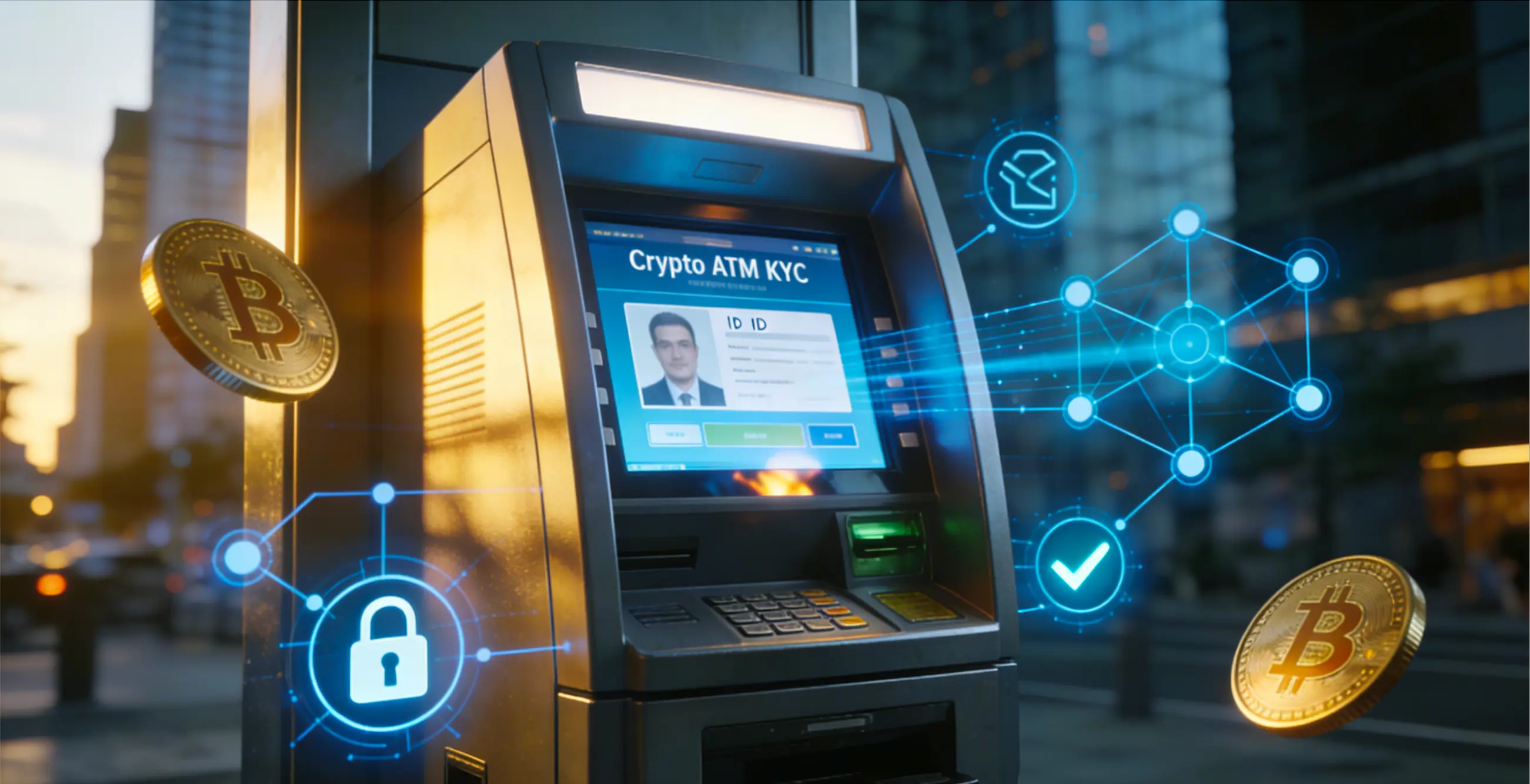
Bitcoin Depot (Nasdaq: BTM), North America’s largest cryptocurrency ATM operator, has initiated a phased rollout requiring customer identification for every transaction at its US-based kiosks, marking a significant voluntary enhancement to its compliance framework.
The policy, implemented in early February 2026, comes as the company faces active lawsuits from the Massachusetts and Iowa attorneys general alleging insufficient safeguards against scams targeting elderly users, with the FBI reporting $333 million in crypto ATM-related fraud losses in 2025.
Continuous Identity Verification Policy Takes Effect
Bitcoin Depot announced on February 24, 2026, that it has begun implementing mandatory ID verification for all transactions across its US ATM network. The Atlanta-based company describes the move as a “significant advancement” in fraud prevention efforts, designed to detect suspicious activity in real time before transactions are approved.
The policy builds on an October 2025 requirement that mandated ID verification only for new users during initial onboarding. Under the expanded framework, returning customers must now present identification for each individual transaction.
“Continuous verification allows us to detect suspicious activity based on customers, locations, or transaction amount before a transaction is approved,” CEO Scott Buchanan stated in the announcement. “By requiring identity verification at every transaction, we are taking an additional step to strengthen security, protect customers, and maintain the integrity of our services.”
The company aims to combat account sharing, identity theft, and account takeover attempts through the enhanced verification protocol. Bitcoin Depot operates approximately 8,800 ATMs across North America, holding the largest market share among US crypto ATM operators.
State-Level Lawsuits Challenge Industry Practices
The compliance upgrade follows escalating legal pressure from state attorneys general. On February 6, 2026, Massachusetts Attorney General Andrea Campbell filed a lawsuit against Bitcoin Depot, alleging the company knowingly facilitated cryptocurrency scams while removing safeguards against fraud.
The Massachusetts complaint specifically requests court-ordered remedies, including barring Bitcoin Depot from processing transactions exceeding $10,000 “without taking additional steps to prevent fraud.” Proposed measures include implementing question-based fraud risk assessments and establishing formal refund processes for scam victims.
The lawsuit notes that prior to October 2025, customers could purchase small amounts of Bitcoin by providing only a phone number, a practice prosecutors allege enabled fraudulent activity. Campbell’s complaint also echoes allegations from Iowa’s 2025 lawsuit regarding hidden transaction markups.
In January 2026, Bitcoin Depot reached a $1.9 million settlement with Maine Attorney General Aaron Frey, agreeing to reimburse individuals who lost money to scams while using the company’s ATMs. The settlement followed a separate Iowa Supreme Court ruling that permitted Bitcoin Depot to retain funds deposited through its ATMs that originated from scams, based on customer attestations regarding wallet ownership.
Regulatory Landscape and Fraud Statistics Drive Industry Changes
The FBI reported that Americans lost $333 million to cryptocurrency ATM-related fraud in 2025, highlighting the growing scale of the issue. Scammers increasingly target seniors using Bitcoin ATMs due to the irreversible nature of blockchain transactions, often impersonating government agencies or tech support to coerce payments.
According to the American Association of Retired Persons (AARP), 17 US states have enacted laws targeting crypto ATM operators as of February 2026. Regulatory measures include daily transaction limits, mandatory fraud warning signage, and licensing requirements. California and Texas have implemented some of the strictest transaction caps nationally.
The United States hosts 31,360 cryptocurrency ATMs, representing 78% of the global total according to Coin ATM Radar, with Bitcoin Depot operating approximately 9,019 kiosks as the market leader.
FAQ: Understanding Bitcoin Depot’s New ID Requirements
Why is Bitcoin Depot now requiring ID for every ATM transaction?
Bitcoin Depot is implementing continuous identity verification to enhance fraud detection and comply with increasing regulatory scrutiny. The policy allows the company to identify suspicious patterns in real time and addresses allegations from state prosecutors that insufficient safeguards have enabled scams targeting elderly users.
Which states have taken legal action against crypto ATM operators?
Massachusetts filed a lawsuit against Bitcoin Depot in February 2026 seeking court-ordered fraud prevention measures. Iowa initiated legal action against both Bitcoin Depot and rival Coinflip in 2025. Maine reached a $1.9 million settlement with Bitcoin Depot in January 2026, requiring reimbursement to scam victims. Additionally, 17 states have passed general legislation regulating crypto ATM operations.
What fraud risks are associated with cryptocurrency ATMs?
The FBI reported $333 million in crypto ATM-related fraud losses in 2025. Scammers exploit the irreversible nature of Bitcoin transactions, often targeting seniors through impersonation schemes involving fake government payments or tech support requests. Victims deposit cash into ATMs, which is then converted to cryptocurrency and transferred to wallets controlled by fraudsters.
How does Bitcoin Depot’s new policy differ from previous requirements?
Prior to October 2025, Bitcoin Depot required only a phone number for small transactions. The company then implemented ID verification for new users during onboarding. The current policy, rolling out in February 2026, extends verification requirements to every transaction for all users, regardless of prior history with the platform.
Market Impact and Industry Implications
Bitcoin Depot’s stock price declined 6.7% to $5.37 on February 24, 2026, following the policy announcement, with shares down approximately 80% over the preceding six months. The compliance enhancements represent a voluntary industry response to escalating regulatory action, though legal challenges continue in multiple jurisdictions.
The Massachusetts lawsuit remains active, with prosecutors seeking structural injunctions that could establish precedents for crypto ATM operations nationwide. The outcome may influence how other operators balance accessibility with fraud prevention requirements in an increasingly regulated environment.
Disclaimer: The information on this page may come from third parties and does not represent the views or opinions of Gate. The content displayed on this page is for reference only and does not constitute any financial, investment, or legal advice. Gate does not guarantee the accuracy or completeness of the information and shall not be liable for any losses arising from the use of this information. Virtual asset investments carry high risks and are subject to significant price volatility. You may lose all of your invested principal. Please fully understand the relevant risks and make prudent decisions based on your own financial situation and risk tolerance. For details, please refer to
Disclaimer.
Related Articles
Robert Kiyosaki Urges Bitcoin Accumulation Before Bubble Bursts, Predicts BTC 'to the Stars'
Rising fears of a market rupture are pushing investors toward alternative assets, as Robert Kiyosaki warns a fragile financial system could trigger a rapid repricing that sends bitcoin, ethereum, gold, and silver sharply higher.
Robert Kiyosaki Signals
Coinpedia17m ago
Bitcoin Core releases v31.0rc1 test version; the official version will be launched after subsequent testing is completed.
Gate News reported that on March 18, Bitcoin Core released v31.0rc1 release candidate version, which is the next major version following v30.2. The version is currently open for testing, and developers can download binary files and review release notes. The official version is expected to be released after subsequent testing is completed.
GateNews19m ago
Strategy First-ever week utilizing perpetual preferred shares as the primary financing tool, purchasing 22,337 BTC
Strategy announced on March 17 that it raised $1.18 billion through perpetual preferred stock (STRC) financing to purchase 22,337 Bitcoin, marking the fifth-largest acquisition. The STRC financing brought the company's total annual dividend obligations to over $1 billion. Going forward, the company will rely more heavily on STRC to avoid equity dilution, while also considering increasing dividends to support the stock price.
GateNews21m ago
Why Did Bitcoin Fall Today? Iran's Key Leader Dies, Hormuz Strait Faces Blockade Again
Recent reasons for Bitcoin's decline include geopolitical conflict uncertainty triggered by the death of Iranian wartime official Larijani, the blockade of the Strait of Hormuz pushing oil prices above $100, exacerbating inflation pressures and reducing Federal Reserve rate cut expectations, as well as institutional capital withdrawal. On the technical side, $72,000 is an important support level, and a break below could lead to further exploration toward $64,000.
MarketWhisper42m ago
Trader "First Sets 10 Major Targets" Goes Long for $14.668 Million Profit, Then Shifts to Shorting BTC at Opening Price Around $74,200
Gate News reported that on March 18, according to AI Auntie's monitoring, trader "Set 10 Big Goals First" @Jason60704294, who previously profited 14.668 million USD from long positions, reversed direction early morning to short BTC. Currently holding 28.48 BTC, with an estimated entry price of approximately $74,210 USD based on tweet timing. This position was opened on a certain CEX and cannot be tracked to an address or verified through on-chain data.
GateNews44m ago
BlackRock withdrew 2449 BTC from a certain CEX 7 hours ago, worth approximately $182 million
Gate News: On March 18, according to Onchain Lens monitoring, 7 hours ago, BlackRock withdrew 2,449 BTC (worth $181.82 million) from a certain CEX. Over the past two days, BlackRock withdrew 6,167 BTC (worth $456.23 million) from the CEX and deposited 2,267 BTC (worth $166.66 million).
GateNews54m ago


