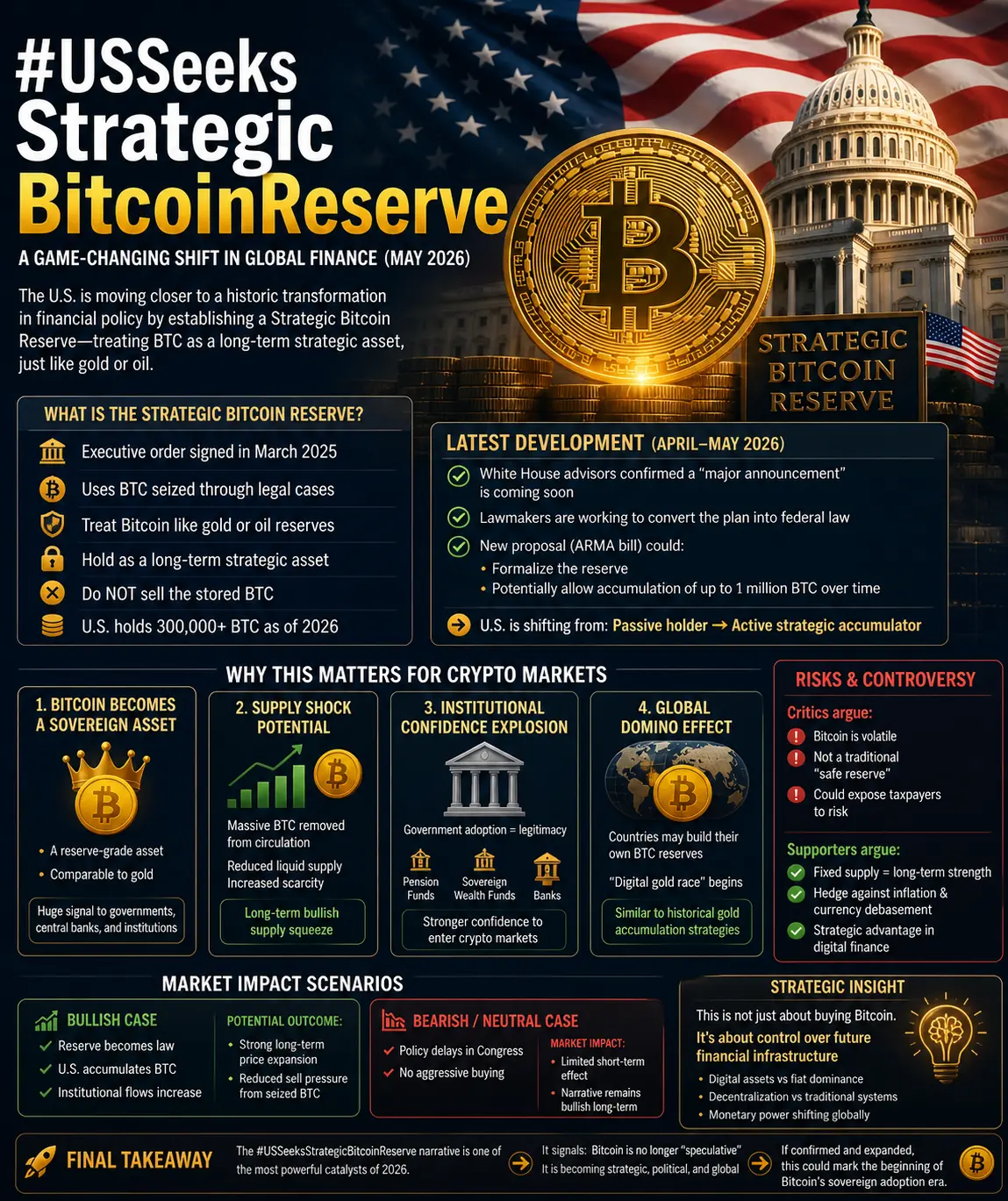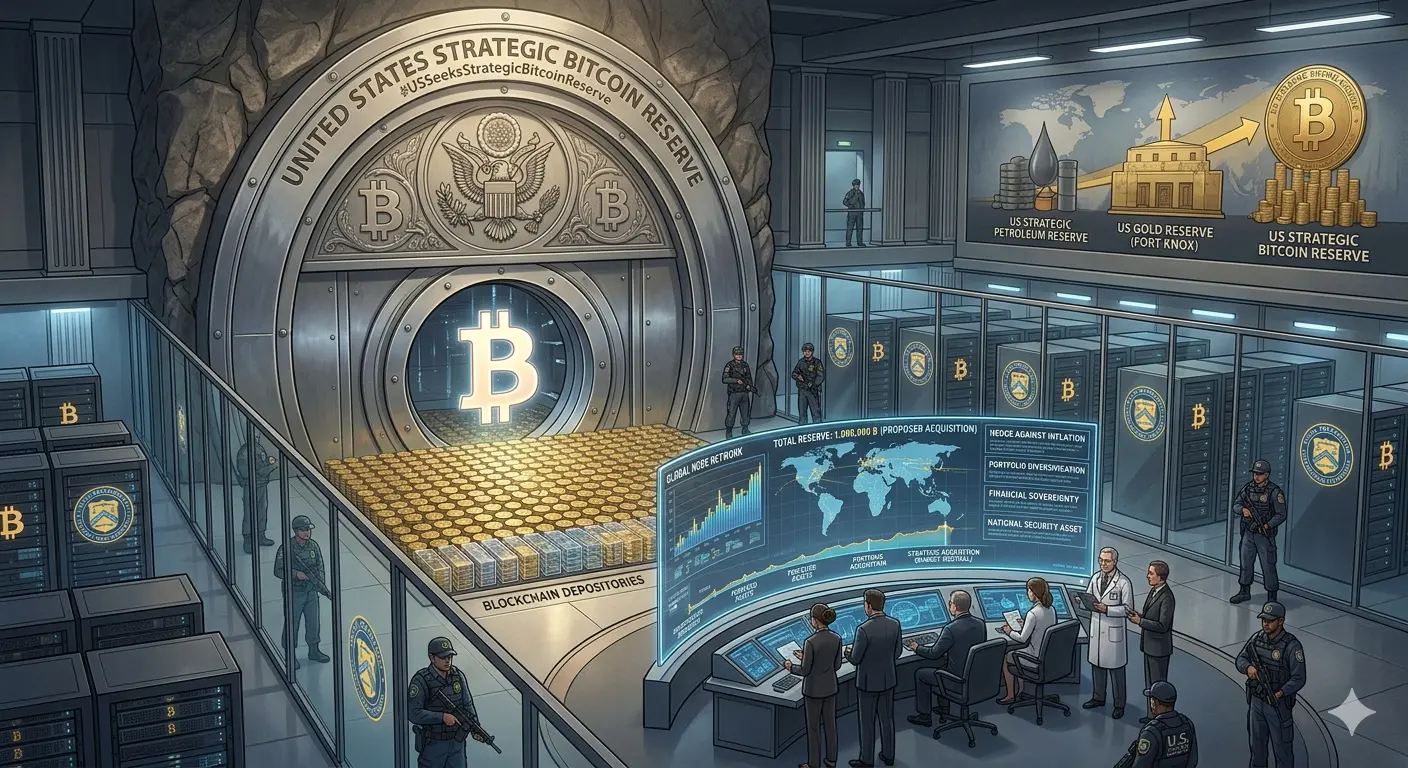


#USSeeksStrategicBitcoinReserve
April 2026 may eventually be remembered as the phase where Bitcoin quietly transitioned from a market-driven asset into a policy-driven discussion at the highest level. While price action appears calm on the surface, holding within the $75K–$77K range, the underlying narrative is becoming far more significant. Consolidation at these levels is not showing weakness—it is reflecting absorption, where both institutional and strategic players are positioning without aggressively moving the market.
The idea of a United States strategic Bitcoin reserve is no longer a fringe concept. It is emerging from the intersection of economic pressure, geopolitical competition, and the search for alternative stores of value. Traditional reserve assets like gold and fiat currencies have long dominated this space, but Bitcoin introduces a fundamentally different structure—fixed supply, decentralized control, and global accessibility. In a world where monetary expansion continues and debt levels rise, this model is beginning to attract serious attention at the sovereign level.
What makes this development particularly important is not just the potential decision itself, but the signal it would send globally. If the United States begins even a gradual accumulation strategy, it would redefine how nations approach financial security. Other economies would likely follow, not out of innovation, but out of necessity. This kind of shift could transform Bitcoin from a competitive asset into a strategic requirement, accelerating its integration into the global financial system.
From a market structure perspective, Bitcoin is currently positioned in a classic accumulation range. Price stability between strong support and resistance levels suggests that large players are building positions without triggering volatility. The repeated defense of lower levels indicates sustained demand, while the inability to break higher shows controlled distribution at resistance. This balance typically does not last long, and when it resolves, the move tends to be decisive.
If buyers manage to maintain control above the current range and push price beyond the $80K region, it could open the path toward a stronger expansion phase driven by both technical breakout momentum and reinforcing macro narratives. On the other hand, any loss of key support zones may lead to a temporary pullback, but unless the broader structure breaks, such corrections are likely to be viewed as repositioning opportunities rather than trend reversals.
The deeper implication lies in supply dynamics. Bitcoin’s fixed supply means that any form of government-level accumulation introduces a long-term imbalance between available liquidity and demand. Unlike traditional assets, new supply cannot be created in response to rising interest. This creates the foundation for a potential supply shock scenario, where even gradual accumulation can have amplified price effects over time.
At the same time, it is important to recognize that narratives often move faster than policy. Discussions around strategic reserves still require alignment across regulatory, political, and economic frameworks. This introduces uncertainty in the short term, keeping volatility present even as the long-term outlook strengthens. Markets will continue to react not only to price levels, but to signals, statements, and incremental developments tied to this theme.
What we are witnessing is not just another bullish narrative, but a shift in perception. Bitcoin is gradually being reframed from a speculative instrument into a strategic asset class with potential national importance. Price consolidation near current levels may appear uneventful, but historically, such periods often precede the most significant expansions—especially when supported by evolving fundamentals.
The real story is not where Bitcoin is trading today, but how it is being positioned for tomorrow. If sovereign adoption moves from discussion to action, the role of Bitcoin in the global system may change permanently, turning it from an alternative into a foundational component of modern financial strategy.
#FirstTradeOfTheWeek
#GateSquareMayTradingShare
April 2026 may eventually be remembered as the phase where Bitcoin quietly transitioned from a market-driven asset into a policy-driven discussion at the highest level. While price action appears calm on the surface, holding within the $75K–$77K range, the underlying narrative is becoming far more significant. Consolidation at these levels is not showing weakness—it is reflecting absorption, where both institutional and strategic players are positioning without aggressively moving the market.
The idea of a United States strategic Bitcoin reserve is no longer a fringe concept. It is emerging from the intersection of economic pressure, geopolitical competition, and the search for alternative stores of value. Traditional reserve assets like gold and fiat currencies have long dominated this space, but Bitcoin introduces a fundamentally different structure—fixed supply, decentralized control, and global accessibility. In a world where monetary expansion continues and debt levels rise, this model is beginning to attract serious attention at the sovereign level.
What makes this development particularly important is not just the potential decision itself, but the signal it would send globally. If the United States begins even a gradual accumulation strategy, it would redefine how nations approach financial security. Other economies would likely follow, not out of innovation, but out of necessity. This kind of shift could transform Bitcoin from a competitive asset into a strategic requirement, accelerating its integration into the global financial system.
From a market structure perspective, Bitcoin is currently positioned in a classic accumulation range. Price stability between strong support and resistance levels suggests that large players are building positions without triggering volatility. The repeated defense of lower levels indicates sustained demand, while the inability to break higher shows controlled distribution at resistance. This balance typically does not last long, and when it resolves, the move tends to be decisive.
If buyers manage to maintain control above the current range and push price beyond the $80K region, it could open the path toward a stronger expansion phase driven by both technical breakout momentum and reinforcing macro narratives. On the other hand, any loss of key support zones may lead to a temporary pullback, but unless the broader structure breaks, such corrections are likely to be viewed as repositioning opportunities rather than trend reversals.
The deeper implication lies in supply dynamics. Bitcoin’s fixed supply means that any form of government-level accumulation introduces a long-term imbalance between available liquidity and demand. Unlike traditional assets, new supply cannot be created in response to rising interest. This creates the foundation for a potential supply shock scenario, where even gradual accumulation can have amplified price effects over time.
At the same time, it is important to recognize that narratives often move faster than policy. Discussions around strategic reserves still require alignment across regulatory, political, and economic frameworks. This introduces uncertainty in the short term, keeping volatility present even as the long-term outlook strengthens. Markets will continue to react not only to price levels, but to signals, statements, and incremental developments tied to this theme.
What we are witnessing is not just another bullish narrative, but a shift in perception. Bitcoin is gradually being reframed from a speculative instrument into a strategic asset class with potential national importance. Price consolidation near current levels may appear uneventful, but historically, such periods often precede the most significant expansions—especially when supported by evolving fundamentals.
The real story is not where Bitcoin is trading today, but how it is being positioned for tomorrow. If sovereign adoption moves from discussion to action, the role of Bitcoin in the global system may change permanently, turning it from an alternative into a foundational component of modern financial strategy.
#FirstTradeOfTheWeek
#GateSquareMayTradingShare