ผู้เขียน: 0xWeiler แหล่งที่มา: X, @0xWeiler แปล: ชนโอป้า, คิงส์คอสเฟียน
การใช้งานที่ก้าวล้ำในปี 2025
ในช่วงการเลือกตั้งสหรัฐอเมริกา 2024 ตลาดทำนายผลประสบความสำเร็จในการเข้าสู่สายตาหลัก —— อัตราต่อรองการเลือกตั้งบนแพลตฟอร์ม Polymarket และ Kalshi ควบคู่กับข้อมูลผลสำรวจแบบดั้งเดิม กลายเป็นสัญญาณแนวทางอารมณ์การเลือกตั้งแบบทางเลือก ผลลัพธ์สุดท้าย ตลาดทำนายผลเหล่านี้สามารถทำนายผลการเลือกตั้งได้แม่นยำกว่าการสำรวจแบบดั้งเดิมอย่างมาก
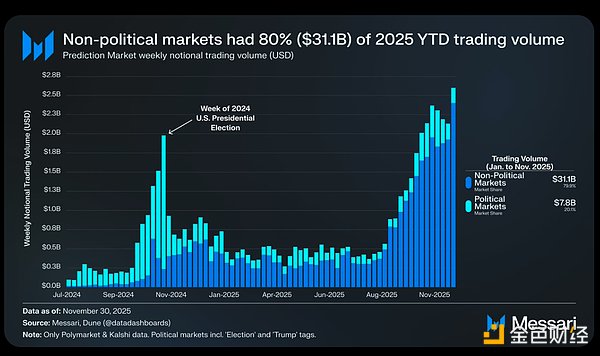
ห้าเดือนก่อนการเลือกตั้ง ปริมาณการซื้อขายใน Polymarket และ Kalshi เพิ่มขึ้นอย่างระเบิดระเบ้อ 3186% จาก 1.4 พันล้านดอลลาร์ในเดือนพฤษภาคม 2024 พุ่งขึ้นเป็น 4.6 หมื่นล้านดอลลาร์ในเดือนตุลาคม 2024 (เดือนก่อนวันเลือกตั้ง 5 พฤศจิกายน) การเติบโตนี้ทำให้ตลาดทำนายผลกลายเป็นหนึ่งในแอปพลิเคชันแรกๆ ของอุตสาหกรรมคริปโตที่ประสบความสำเร็จในการก้าวข้ามขีดจำกัด
อย่างไรก็ตาม ตลาดการเมืองในปี 2024 คิดเป็น 62% ของปริมาณการซื้อขายทั้งหมดในตลาดทำนายผล ซึ่งทำให้หลายคนเชื่อว่า การเมืองเป็นเพียงแค่กรณีใช้งานเดียวที่แท้จริงของตลาดทำนายผล และตั้งคำถามว่าความต้องการในตลาดจะยังคงอยู่ต่อไปหลังจากรอบการเลือกตั้งสิ้นสุดลงหรือไม่
ในตอนแรก มุมมองของผู้ตั้งคำถามดูเหมือนจะได้รับการยืนยัน: ในสี่เดือนหลังการเลือกตั้ง ปริมาณการซื้อขายรายเดือนลดลงถึง 63% จาก 4.6 หมื่นล้านดอลลาร์ในเดือนตุลาคม 2024 เหลือเพียง 1.7 หมื่นล้านดอลลาร์ในเดือนกุมภาพันธ์ 2025
แต่ในช่วงเวลาที่เหลือของปี 2025 ตลาดทำนายผลแสดงให้เห็นด้วยผลลัพธ์ที่เป็นรูปธรรมว่า นอกจากในด้านการเมืองแล้ว ตลาดยังมีความสอดคล้องกับตลาดผลิตภัณฑ์ (PMF) อย่างชัดเจน
หลังจากต่ำสุดในเดือนกุมภาพันธ์ ปริมาณการซื้อขายรายเดือนของ Polymarket และ Kalshi ก็พุ่งขึ้นอย่างต่อเนื่อง จนถึงเดือนพฤศจิกายน เพิ่มขึ้น 441% แตะที่ 9.2 พันล้านดอลลาร์ โดยปริมาณการซื้อขายในเดือนกันยายน ตุลาคม และพฤศจิกายน ก็สูงกว่าจุดสูงสุดในเดือนตุลาคม 2024
แนวโน้มการเติบโตนี้ส่วนใหญ่มาจากตลาดที่ไม่ใช่ด้านการเมือง รวมถึงกีฬา คริปโต และวัฒนธรรม ในช่วงกรกฎาคมถึงธันวาคม 2024 ตลาดที่ไม่ใช่ด้านการเมืองคิดเป็น 38% ของปริมาณการซื้อขายรวมบนสองแพลตฟอร์ม (60 พันล้านดอลลาร์) และในมกราคมถึงพฤศจิกายน 2025 สัดส่วนนี้เพิ่มขึ้นเป็น 80% (311 พันล้านดอลลาร์) ตลาดทำนายผลสามารถก้าวข้ามข้อจำกัดด้านความต้องการที่ขับเคลื่อนโดยการเลือกตั้ง และสร้างการใช้งานอย่างต่อเนื่องในบริบทที่ไม่ใช่ด้านการเมือง
แรงผลักดันการเติบโตมาจากไหน? ปี 2026 จะไปทางไหน?
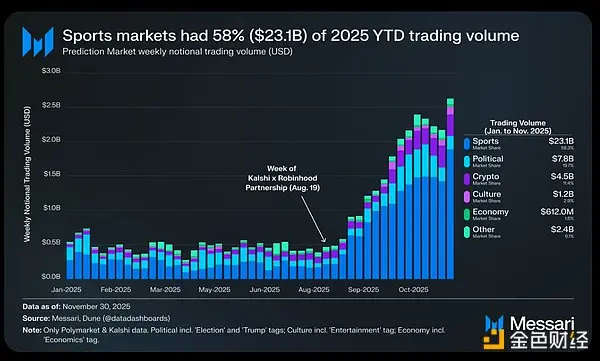
ในปี 2025 วงการกีฬาได้กลายเป็นแรงขับเคลื่อนหลักของการเติบโตของปริมาณการซื้อขายในตลาดทำนายผล ตั้งแต่เดือนมกราคมถึงพฤศจิกายน ตลาดด้านกีฬาเป็นผู้นำด้วยสัดส่วน 58% (231 พันล้านดอลลาร์) รองลงมาคือด้านการเมือง 20% (78 พันล้านดอลลาร์) และคริปโต 11% (45 พันล้านดอลลาร์) ส่วนด้านวัฒนธรรมอยู่ในอันดับสี่ด้วย 3% (12 พันล้านดอลลาร์)
ตัวเร่งสำคัญที่ทำให้เกิดการระเบิดของตลาดด้านกีฬา คือ ความร่วมมือระหว่าง Kalshi กับ Robinhood เมื่อวันที่ 19 สิงหาคม ซึ่งผู้ใช้สามารถทำนายผลการแข่งขัน NFL และอเมริกันฟุตบอลระดับมหาวิทยาลัยผ่านศูนย์กลางตลาดทำนายของ Robinhood การร่วมมือนี้สร้างผลกระทบสองด้าน: ด้านหนึ่ง ผู้ใช้ที่ไม่ใช่คริปโตเดิมสามารถเข้าร่วมการซื้อขายได้โดยตรงผ่านบัญชี Robinhood ซึ่งลดอุปสรรคในการใช้งาน อีกด้านหนึ่ง ให้โอกาสผู้ใช้ในสหรัฐฯ เข้าถึงช่องทางการซื้อขายผลการแข่งขันกีฬาอย่างถูกต้องตามกฎหมาย และอัตราต่อรองดีกว่าพื้นที่เดิมพันกีฬาแบบดั้งเดิม เช่น DraftKings, FanDuel หลังจากความร่วมมือ ปริมาณการซื้อขายรายเดือนในตลาดด้านกีฬาเพิ่มจาก 965.2 ล้านดอลลาร์ในเดือนสิงหาคม เป็น 6.3 พันล้านดอลลาร์ในเดือนพฤศจิกายน เพิ่มขึ้น 551%
แม้แนวโน้มในปี 2025 จะยังแข็งแกร่ง แต่ปริมาณการซื้อขายในตลาดทำนายผลยังคงเป็นส่วนน้อยในอุตสาหกรรมการพนันกีฬาโดยรวม ในปี 2024 แพลตฟอร์มการพนันกีฬาที่ได้รับใบอนุญาตในสหรัฐฯ มีปริมาณการซื้อขายรวม 150 พันล้านดอลลาร์ โดย FanDuel จัดการได้ 50.7 พันล้านดอลลาร์ และ DraftKings จัดการได้ 49.4 พันล้านดอลลาร์
ตลาดทำนายผลยังคงตามหลังแพลตฟอร์มการพนันกีฬาดั้งเดิมในด้านปริมาณการซื้อขาย เนื่องจากประเภทการเดิมพันมีข้อจำกัด โดยเฉพาะการเดิมพันแบบพาร์เลย์ (parlay bets) และการเดิมพันเฉพาะผู้เล่น (player props) Polymarket ไม่สนับสนุนการเดิมพันแบบพาร์เลย์ Kalshi ให้บริการแบบจำกัด และทั้งสองแพลตฟอร์มก็ขาดผลิตภัณฑ์การเดิมพันเฉพาะผู้เล่นที่หลากหลาย การจำกัดนี้สำคัญมาก — คาดว่าการเดิมพันแบบพาร์เลย์คิดเป็นประมาณ 30% ของปริมาณการซื้อขายในแพลตฟอร์มการพนันกีฬาดั้งเดิม ซึ่งอัตราการจ่ายเงินแฝงที่สูงทำให้เป็นที่ดึงดูดสำหรับนักเดิมพันรายย่อย หากไม่สามารถพัฒนาผลิตภัณฑ์การเดิมพันแบบพาร์เลย์และการเดิมพันเฉพาะผู้เล่นให้ครบถ้วน ตลาดทำนายผลจะไม่สามารถตอบสนองความต้องการจำนวนมากในด้านการพนันกีฬาได้
เรามองว่าการขยายประเภทการเดิมพันเป็นโอกาสชัดเจนในการลดช่องว่างนี้ และจะเป็นทิศทางหลักของการผลักดันตลาดทำนายผลในปี 2026
แม้จะมีข้อจำกัดเหล่านี้ ตลาดทำนายผลยังคงมีข้อได้เปรียบด้านการกำหนดราคาในจุดสำคัญ โดยอิงโครงสร้างสมุดคำสั่ง (order book) ซึ่งอนุญาตให้ผู้ใช้ซื้อขายกันโดยตรง แทนที่จะเดิมพันกับ “เจ้ามือ” ซึ่งทำให้ราคาต่อรองของผลลัพธ์เดียวกันดีกว่าและคาดหวังว่าจะจ่ายสูงกว่า ข้อได้เปรียบนี้ชัดเจนสำหรับ “ปลาวาฬ” ที่เดิมพันจำนวนมาก — การปรับปรุงเล็กน้อยในอัตราต่อรองสามารถส่งผลต่อผลตอบแทนอย่างมีนัยสำคัญ ในปี 2026 คาดว่าข้อได้เปรียบด้านราคานี้จะยังคงดึงดูดผู้ใช้ให้เปลี่ยนจากแพลตฟอร์มการพนันกีฬาดั้งเดิมไปยังตลาดทำนายผล (โดยเฉพาะนักเดิมพันรายใหญ่) ซึ่งจะช่วยผลักดันปริมาณการซื้อขายในตลาดด้านกีฬาให้เติบโตต่อไป
แม้ว่าด้านกีฬาเป็นผู้นำในด้านปริมาณการซื้อขาย แต่ด้านวัฒนธรรมในช่วงครึ่งหลังของปี 2025 กลายเป็นกลุ่มที่เติบโตเร็วที่สุดในตลาดทำนายผล ตั้งแต่เดือนสิงหาคมถึงพฤศจิกายน ปริมาณการซื้อขายรายเดือนในตลาดด้านวัฒนธรรมเพิ่มจาก 43.6 ล้านดอลลาร์ เป็น 3.161 พันล้านดอลลาร์ คิดเป็นการเติบโต 625% การเติบโตนี้เกิดจากความต่อเนื่องของตลาดด้านวัฒนธรรมหลายแห่ง ไม่ใช่แค่เหตุการณ์ฮอตฮิตเพียงอย่างเดียว
ความสำคัญของตลาดด้านวัฒนธรรมอยู่ในสองด้าน: อันดับแรก ปริมาณการซื้อขายและอัตราส่วนของสัญญาเปิดคงค้าง (open interest) อยู่ในอันดับสองรองจากด้านกีฬา ซึ่งแสดงให้เห็นว่ามีอัตราการเปลี่ยนมือสูงและความถี่ในการชำระบัญชีรวดเร็ว ลักษณะนี้เป็นประโยชน์ต่อแพลตฟอร์มที่ทำกำไรจากปริมาณการซื้อขาย เพราะผู้ใช้จะใช้เงินซ้ำแล้วซ้ำอีก ไม่ล็อคเงินไว้ในการเดิมพันระยะยาว
ประการที่สอง ตลาดด้านวัฒนธรรมไม่มีฉากทดแทนที่แท้จริง ตลาดด้านกีฬา ต้องแข่งขันกับแพลตฟอร์มการพนันกีฬาดั้งเดิม แต่สำหรับผลลัพธ์ที่เกี่ยวข้องกับวัฒนธรรมออนไลน์ ความบันเทิง สังคมสาธารณะ ฯลฯ (เช่น “ซีรีส์ Netflix ยอดนิยมประจำสัปดาห์นี้คือเรื่องอะไร”) ปัจจุบันยังไม่มีช่องทางทดแทนแบบเดียวกัน ตลาดทำนายผลเป็นแพลตฟอร์มเดียวที่ให้ผู้ใช้สร้างและทำการซื้อขายในสินค้าทำนายผลประเภทนี้ ซึ่งคล้ายกับตลาดทำนายผลด้านการเมืองในปี 2024 — เนื่องจากขาดทางเลือกที่เป็นไปได้ การทำธุรกรรมจึงมีความเข้มข้นสูง ส่งผลให้ปริมาณการซื้อขายขยายตัวอย่างรวดเร็ว
โครงสร้างนี้เป็นข้อได้เปรียบที่ชัดเจน ซึ่งจะเป็นเส้นทางสู่การขยายตัวของตลาดด้านวัฒนธรรมในช่วงเริ่มต้นของการใช้งานและการแพร่หลายอย่างต่อเนื่อง Tarek Mansour ซีอีโอของ Kalshi กล่าวว่า ในอีก 5 ปีข้างหน้า ตลาดด้านวัฒนธรรมจะเป็นกลุ่มที่มีศักยภาพในการเติบโตสูงที่สุดในบรรดาแพลตฟอร์มทำนายผลทั้งหมด เมื่อการเจาะตลาดในกลุ่มผู้ใช้งานดั้งเดิมที่ไม่ใช่คริปโตเพิ่มขึ้น แนวโน้มนี้จะนำไปสู่การเข้าถึงกลุ่มผู้ใช้งานที่มีความเชี่ยวชาญด้านวัฒนธรรม เมื่อกลุ่มเหล่านี้ตระหนักว่าตลาดทำนายผลสามารถเปลี่ยนความรู้เป็นรายได้ พวกเขาจะรวมตัวกันในช่องทางเดียวที่สามารถสร้างรายได้ได้อย่างแท้จริง ด้วยปัจจัยเหล่านี้ เราเชื่อว่า ภายในปี 2026 ตลาดด้านวัฒนธรรมจะกลายเป็นสามกลุ่มที่เติบโตเร็วที่สุดในปริมาณการซื้อขายในตลาดทำนายผล
โครงสร้างการแข่งขัน
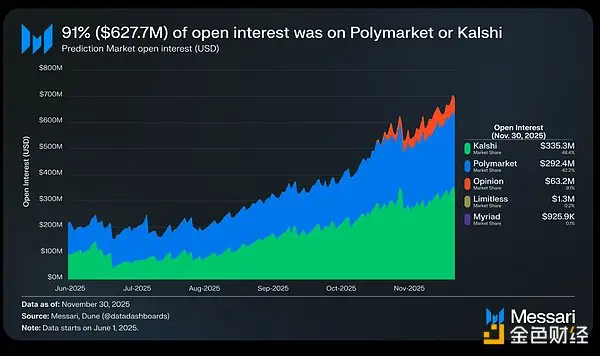
ในปี 2025 ปริมาณสัญญาเปิดคงค้าง (OI) ของตลาดทำนายผลแสดงให้เห็นภาพการแข่งขันแบบสองเบอร์ — Polymarket และ Kalshi คิดเป็นส่วนแบ่งตลาดรวม 91% (6.277 พันล้านดอลลาร์) ระหว่างวันที่ 1 มิถุนายน ถึง 30 พฤศจิกายน 2025 ปริมาณสัญญาเปิดคงค้างของ Kalshi เพิ่มขึ้น 258% จาก 93.7 ล้านดอลลาร์ เป็น 335.3 ล้านดอลลาร์ ในขณะที่ Polymarket เพิ่มขึ้น 133% จาก 125.3 ล้านดอลลาร์ เป็น 292.4 ล้านดอลลาร์ ตลอดปี ทั้งสองแพลตฟอร์มยังคงอยู่ในช่วงความแตกต่างที่เล็กน้อย แต่ก็เป็นผู้นำที่ชัดเจนเหนือคู่แข่งรายเล็ก
การเติบโตของปริมาณสัญญาเปิดคงค้างนี้ เกิดขึ้นในปีที่ทั้งสองฝ่ายวางกลยุทธ์ด้านนิเวศน์อย่างแข็งขัน ปี 2025 ทั้งคู่ได้สร้างความร่วมมือกับแบรนด์หลัก เช่น CNN, CNBC, UFC, NHL, Yahoo Finance เพื่อขยายช่องทางการจัดจำหน่าย คาดว่าจะช่วยเพิ่มการมองเห็นในวงกว้างมากขึ้น ขณะเดียวกัน ทั้งสองบริษัทก็ระดมทุนจำนวนมาก: Polymarket ระดมทุนสามรอบตลอดปี โดยในรอบล่าสุดเมื่อวันที่ 7 ตุลาคม ได้รับการลงทุนจาก Intercontinental Exchange (ICE) ซึ่งเป็นบริษัทแม่ของ NYSE มูลค่า 2 พันล้านดอลลาร์ ทำให้มูลค่าบริษัทรวมอยู่ที่ 9 พันล้านดอลลาร์ Kalshi ก็ระดมทุนสองรอบเช่นกัน โดยในรอบล่าสุดเมื่อวันที่ 19 พฤศจิกายน ได้รับการลงทุนมูลค่า 1 หมื่นล้านดอลลาร์ ซึ่งไม่เปิดเผยผู้ลงทุน ทำให้มูลค่าบริษัทเพิ่มเป็น 11 หมื่นล้านดอลลาร์
โดยรวมแล้ว การเติบโตของปริมาณสัญญาเปิดคงค้าง การขยายช่องทางการจัดจำหน่าย และเงินทุนใหม่ที่เข้ามา ได้สร้างรากฐานให้กับ Polymarket และ Kalshi แม้จะไม่รวมการเปิดตัวผลิตภัณฑ์ใหม่หรือแผนการจูงใจใดๆ ก็เชื่อว่า ทั้งสองยังคงมีแนวโน้มที่จะรักษาอัตราการเติบโตในปี 2026 ต่อไป
ในช่วงครึ่งหลังของปี 2025 Polymarket มุ่งเน้นผลักดันการเปิดตัวแอปพลิเคชันเวอร์ชันอเมริกา ซึ่งจะเปิดให้กลุ่มผู้รอคิวในวันที่ 3 ธันวาคม การเปิดตัวในครั้งนี้เป็นความก้าวหน้าสำคัญด้านช่องทางการจัดจำหน่าย คาดว่าจะช่วยเพิ่มปริมาณสัญญาเปิดคงค้างและปริมาณการซื้อขายในปี 2026 อย่างมาก หลังจากความร่วมมือกับ Robinhood ในเดือนสิงหาคม Kalshi ก็มีการเติบโตอย่างมากในปริมาณสัญญาเปิดคงค้างและการซื้อขาย ซึ่งประสบความสำเร็จในการดึงดูดกลุ่มผู้ใช้ที่ไม่ใช่คริปโต หาก Polymarket เวอร์ชันอเมริกาสำหรับเปิดให้ใช้งานเต็มรูปแบบแล้วแสดงแนวโน้มการเติบโตในลักษณะเดียวกัน ปริมาณสัญญาเปิดคงค้างและการซื้อขายก็มีแนวโน้มที่จะเพิ่มขึ้นอย่างมีนัยสำคัญ
นอกจากช่องทางการจัดจำหน่ายแล้ว กิจกรรมแจกโทเคน (airdrop) ก็จะกลายเป็นอีกหนึ่งแรงผลักดันการเติบโตในอนาคต เมื่อวันที่ 24 ตุลาคม Matthew Modabber ซีอีโอด้านการตลาดของ Polymarket ยืนยันแผนเปิดตัว $POLY โทเคนและดำเนินการแจกจ่ายในอนาคต แม้จะยังไม่กำหนดเวลาที่แน่นอน แต่ตลาดคาดว่าจะเกิดขึ้นในปี 2026 เมื่อรวมกับการเปิดตัวแอปเวอร์ชันอเมริกาอย่างเต็มรูปแบบ การแจกจ่ายโทเคนจะสร้างแรงจูงใจเพิ่มเติมให้กับ Polymarket ซึ่งปัจจุบันยังไม่มีใน Kalshi หากทั้งสองปัจจัยนี้สำเร็จในปี 2026 ปริมาณสัญญาเปิดคงค้างของ Polymarket ก็อาจเติบโตขึ้นอย่างมาก จนสามารถแซงหน้า Kalshi และสร้างช่องว่างที่ชัดเจนกับคู่แข่งรายใกล้ที่สุด
ในช่วงส่วนใหญ่ของปี 2025 นอกจาก Polymarket และ Kalshi แล้ว แพลตฟอร์มตลาดทำนายผลอื่นๆ ก็ยังไม่เห็นความคืบหน้าอย่างเป็นรูปธรรม จนกระทั่ง Opinion เข้าสู่ตลาด เมื่อวันที่ 24 ตุลาคม Opinion เปิดตัวแพลตฟอร์ม Opinion.Trade บน BNB Chain ซึ่งปริมาณสัญญาเปิดคงค้างพุ่งแตะ 63.2 ล้านดอลลาร์ ก่อนหน้านี้ นอกจาก Polymarket และ Kalshi แล้ว ไม่มีแพลตฟอร์มใดที่มีปริมาณสัญญาเปิดคงค้างเกิน 3 ล้านดอลลาร์ ซึ่งทำให้ผลงานในช่วงแรกของ Opinion โดดเด่นเป็นพิเศษ
Opinion ไม่ได้ลอกเลียนแบบแพลตฟอร์มเดิม แต่เป็นการเปิดตัวแพลตฟอร์มตลาดทำนายผลบน BNB Chain ที่เป็นแพลตฟอร์มแรก พร้อมกับผลิตภัณฑ์ Opinion AI ซึ่งเป็นเครื่องมือสร้างตลาดที่ให้ผู้ใช้สามารถสร้างตลาด “ใช่ / ไม่ใช่” ได้อย่างรวดเร็วและชัดเจน โดยใช้คำแนะนำง่ายๆ ซึ่งสร้างความเร็วในการสร้างตลาดได้เหนือกว่าคู่แข่ง ในด้านปริมาณสัญญาเปิดคงค้างและการซื้อขาย Opinion ก็แตกต่างอย่างชัดเจนจากคู่แข่งในกลุ่ม Long-tail เช่น Limitless, Myriad ด้วยการผสมผสานผลิตภัณฑ์สร้างตลาดที่แตกต่างและฐานผู้ใช้ของ BNB Chain ทำให้ Opinion ประสบความสำเร็จในการขึ้นสู่อันดับสามของตลาดในปลายปี 2025 คาดว่าในปี 2026 จะกลายเป็นหนึ่งในแพลตฟอร์มคริปโตน้องใหม่ที่มีผลงานดีที่สุดรองจาก Polymarket และ Kalshi
แพลตฟอร์มการพนันกีฬาดั้งเดิมจากอุตสาหกรรมคริปโต ก็จะเพิ่มความเข้มแข็งให้กับการแข่งขันในตลาดในปี 2026 โดย DraftKings และ FanDuel คาดว่าจะเข้าสู่ตลาดทำนายผล จุดประสงค์หลักคือ เข้าถึงกลุ่มผู้ใช้งานในรัฐที่การพนันกีฬาดั้งเดิมยังผิดกฎหมาย เช่น แคลิฟอร์เนีย เท็กซัส และเปิดตัวผลิตภัณฑ์ด้านการเมือง เศรษฐกิจมหภาค ฯลฯ นอกเหนือจากกีฬา หลังจากการเข้าซื้อแพลตฟอร์มการซื้อขายที่ได้รับใบอนุญาตจาก CFTC ของสหรัฐฯ อย่าง Railbird DraftKings ก็วางแผนเปิดตัว DraftKings Predictions ในไตรมาสแรกของปี 2026 เช่นเดียวกับ FanDuel ที่เปิดเผยกลยุทธ์คล้ายกัน โดยมองว่าตลาดทำนายผลเป็นการเสริมธุรกิจการพนันกีฬา ให้ผู้ใช้สามารถซื้อขายผลลัพธ์ของการเลือกตั้ง ราคาน้ำมัน ฯลฯ
ในด้านเศรษฐกิจมหภาคและตลาดนอกกีฬา แพลตฟอร์มการพนันกีฬาดั้งเดิมมีข้อได้เปรียบด้านการจัดจำหน่ายอย่างชัดเจน คาดว่าจะสามารถแย่งชิงส่วนแบ่งตลาดในปี 2026 โดยเฉพาะในกลุ่มตลาดที่ผู้ใช้งานเดิมไม่สามารถเข้าถึงได้ก่อนหน้านี้ แม้ว่า DraftKings และ FanDuel จะครองส่วนแบ่งในด้านปริมาณการซื้อขายในด้านกีฬาอยู่แล้ว การเปิดตัวตลาดทำนายผลก็ไม่น่าจะเพิ่มส่วนแบ่งในด้านกีฬาอย่างมีนัยสำคัญ แต่จะส่งผลกระทบในด้านตลาดนอกกีฬาอย่างลึกซึ้ง — ก่อนหน้านี้ ตลาดทำนายผลดั้งเดิมบนคริปโต ได้เปรียบในด้านผลิตภัณฑ์ตลาดที่ง่ายต่อการเข้าถึง เช่น การประกาศอัตราดอกเบี้ยของเฟด แต่เมื่อแพลตฟอร์มการพนันกีฬาดั้งเดิมเปิดตัวผลิตภัณฑ์ทำนายผลในกลุ่มเดียวกัน ความเป็นเจ้าของในตลาดนอกกีฬาที่มีขนาดใหญ่และมีสภาพคล่องสูงที่สุดก็จะหมดไป อย่างไรก็ตาม เรายังคงเชื่อว่า ตลาดทำนายผลบนคริปโตจะยังคงได้เปรียบในด้านความหลากหลายของตลาดและการครอบคลุมกลุ่มตลาดนอกสายหลัก แม้บรรดายักษ์ใหญ่ดั้งเดิมจะพยายามแย่งชิงตลาดยอดนิยมก็ตาม
สุดท้าย แม้จะเผชิญกับความท้าทายจากคู่แข่งทั้งในกลุ่มตลาดทำนายผลบนคริปโตและแพลตฟอร์มการพนันกีฬาดั้งเดิมที่เข้าสู่ตลาดใหม่ เรายังคงเชื่อว่า Polymarket และ Kalshi จะยังคงเป็นผู้นำในตลาดทำนายผลต่อไป หาก Polymarket สามารถผลักดันให้แอปเวอร์ชันอเมริกาเปิดตัวอย่างเป็นทางการ การออกโทเคน และกิจกรรมแจกจ่ายในอนาคต ก็มีโอกาสที่จะก้าวข้าม Kalshi ได้ ในที่สุด ทั้งสองแพลตฟอร์มมีชื่อเสียงและทรัพยากรทางการเงินที่แข็งแกร่ง พร้อมที่จะเป็นผู้นำในตลาดทำนายผลในอนาคตอันใกล้นี้


