




#StablecoinReserveDrops
Something significant is happening inside the stablecoin market right now and most investors are completely missing it. While the total stablecoin market cap crossed 320 billion dollars in April 2026 and continues to grow, the internal structure of that market is undergoing a historic rotation that tells a deeper story about where institutional confidence actually sits today.
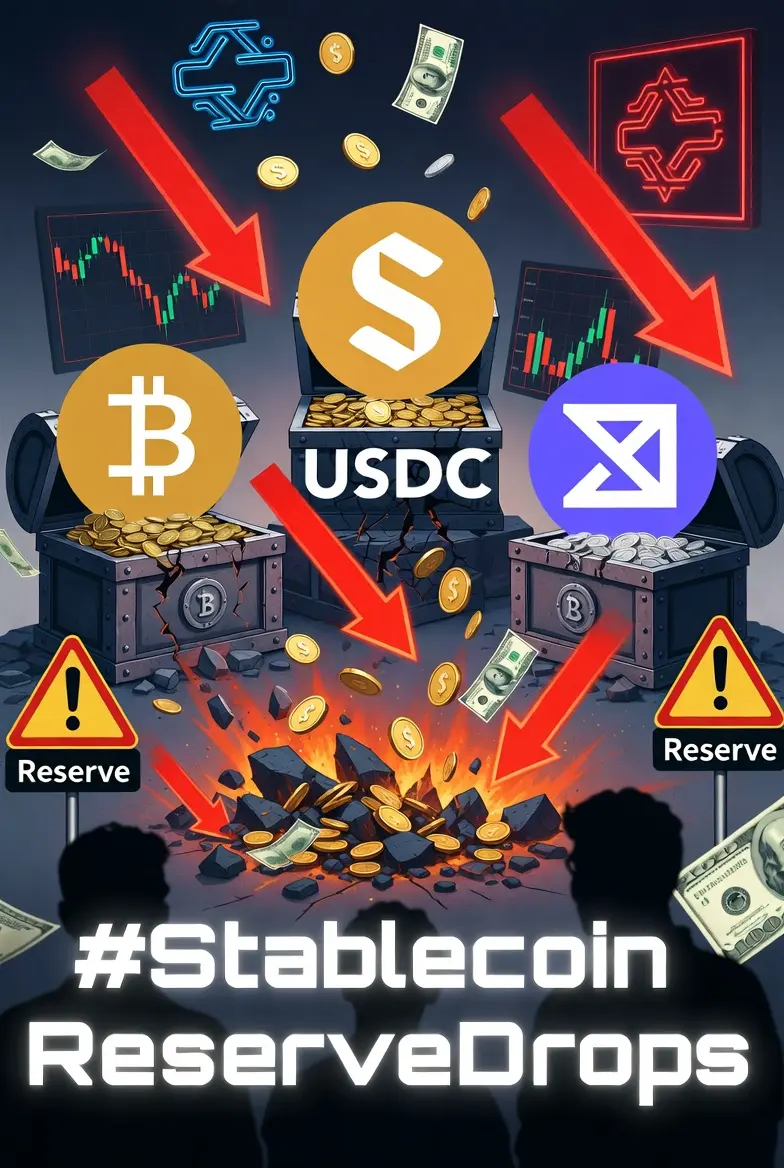
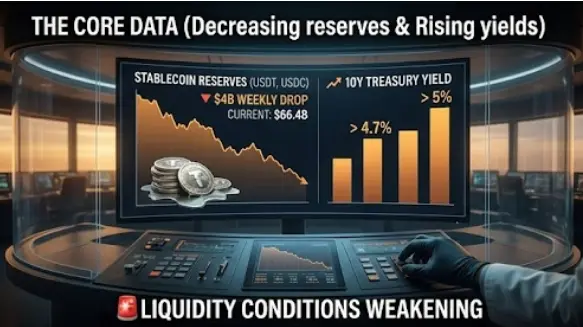
Tether's USDT supply contracted by approximately 3 billion dollars in Q1 2026, dropping to roughly 184 billion dollars. This was its first quarterly reserve drop since Q2 2022. On the Ethereum network alone, USDT recorded more than 7 billion dollars in net outflows in a single quarter. USDT dominance across the total stablecoin market slipped to 58 percent, down from 62 percent just twelve months earlier. Meanwhile Circle's USDC added approximately 2 billion dollars to reach 78 billion dollars, driven entirely by institutional flows and a clear preference for regulated, transparent reserve structures.
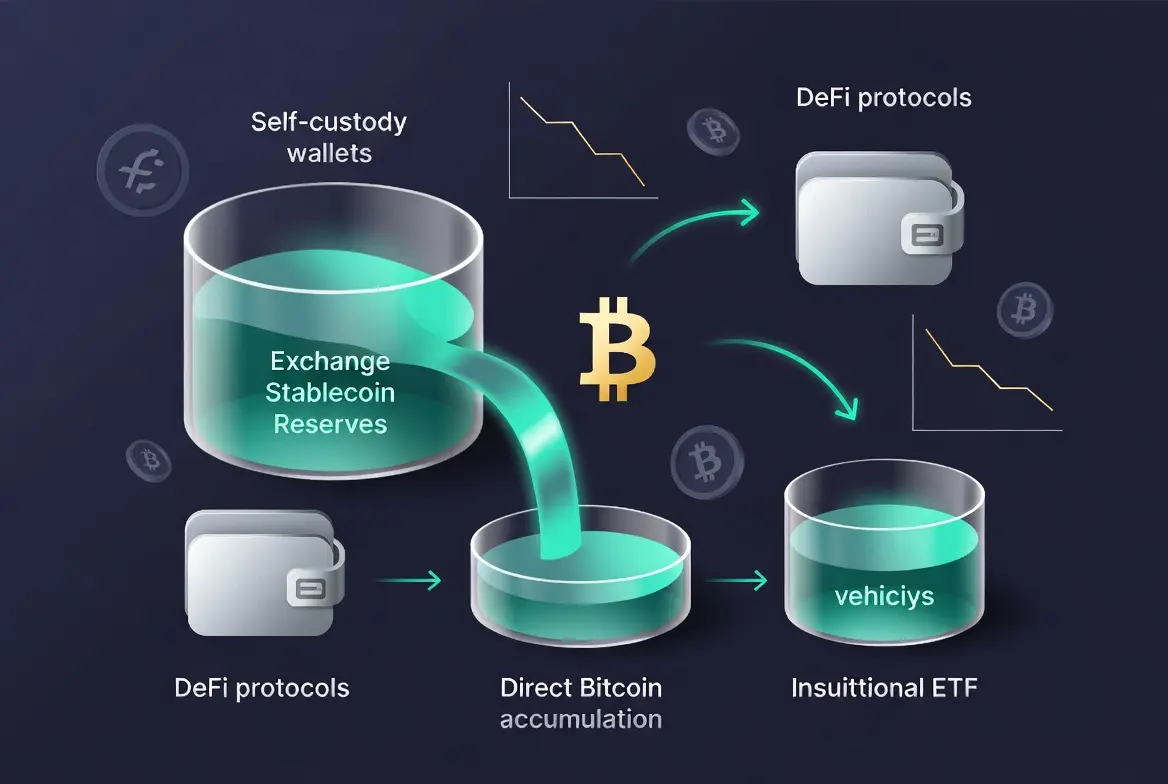
Exchange-level data confirms the rotation is real and deliberate. USDC exchange reserves rose 12 percent in Q1 2026 while USDT exchange reserves fell 12 percent in the same period. This is not retail behavior. Retail stablecoin transfer volumes actually posted their largest historical drop in Q1. This rotation is being driven entirely by institutions, funds, and DeFi protocols that are choosing compliance-grade assets over offshore reserve models as regulatory pressure intensifies across the United States and Europe.
The reason behind this shift is straightforward. The GENIUS Act, signed into law in July 2025, now legally requires every stablecoin issuer to back each token with high-quality liquid assets such as US Treasury bills held inside regulated vehicles. Tether holds a 113 billion dollar US Treasury position as of Q1 2026 according to its own attestation, making it one of the largest sovereign-scale Treasury holders in the world. But its offshore corporate structure and historical opacity around reserve disclosures continue to make institutional compliance teams uncomfortable in a post-GENIUS Act environment. USDC, with its monthly reserve attestations and native deployment on regulated rails, fits the new compliance framework far more naturally.
The practical consequence of this reserve rotation is already visible. Stablecoins now account for 75 percent of total crypto trading volume in Q1 2026. The top five stablecoin issuers control 89 percent of the market. Velocity metrics show higher utility per dollar in circulation, meaning the same dollar supply is now being used more efficiently for settlement and payments than at any previous point. Stablecoins have completed their transition from crypto on-ramps into core financial infrastructure and the reserve composition of that infrastructure is now being shaped by regulatory compliance rather than market convenience.
Anyone holding or building with stablecoins in 2026 needs to understand that reserve quality and regulatory alignment are no longer secondary considerations. They are the primary factors determining which stablecoins survive the next phase of market maturity.
#GateSquareMayTradingShare
Something significant is happening inside the stablecoin market right now and most investors are completely missing it. While the total stablecoin market cap crossed 320 billion dollars in April 2026 and continues to grow, the internal structure of that market is undergoing a historic rotation that tells a deeper story about where institutional confidence actually sits today.
Tether's USDT supply contracted by approximately 3 billion dollars in Q1 2026, dropping to roughly 184 billion dollars. This was its first quarterly reserve drop since Q2 2022. On the Ethereum network alone, USDT recorded more than 7 billion dollars in net outflows in a single quarter. USDT dominance across the total stablecoin market slipped to 58 percent, down from 62 percent just twelve months earlier. Meanwhile Circle's USDC added approximately 2 billion dollars to reach 78 billion dollars, driven entirely by institutional flows and a clear preference for regulated, transparent reserve structures.
Exchange-level data confirms the rotation is real and deliberate. USDC exchange reserves rose 12 percent in Q1 2026 while USDT exchange reserves fell 12 percent in the same period. This is not retail behavior. Retail stablecoin transfer volumes actually posted their largest historical drop in Q1. This rotation is being driven entirely by institutions, funds, and DeFi protocols that are choosing compliance-grade assets over offshore reserve models as regulatory pressure intensifies across the United States and Europe.
The reason behind this shift is straightforward. The GENIUS Act, signed into law in July 2025, now legally requires every stablecoin issuer to back each token with high-quality liquid assets such as US Treasury bills held inside regulated vehicles. Tether holds a 113 billion dollar US Treasury position as of Q1 2026 according to its own attestation, making it one of the largest sovereign-scale Treasury holders in the world. But its offshore corporate structure and historical opacity around reserve disclosures continue to make institutional compliance teams uncomfortable in a post-GENIUS Act environment. USDC, with its monthly reserve attestations and native deployment on regulated rails, fits the new compliance framework far more naturally.
The practical consequence of this reserve rotation is already visible. Stablecoins now account for 75 percent of total crypto trading volume in Q1 2026. The top five stablecoin issuers control 89 percent of the market. Velocity metrics show higher utility per dollar in circulation, meaning the same dollar supply is now being used more efficiently for settlement and payments than at any previous point. Stablecoins have completed their transition from crypto on-ramps into core financial infrastructure and the reserve composition of that infrastructure is now being shaped by regulatory compliance rather than market convenience.
Anyone holding or building with stablecoins in 2026 needs to understand that reserve quality and regulatory alignment are no longer secondary considerations. They are the primary factors determining which stablecoins survive the next phase of market maturity.
#GateSquareMayTradingShare